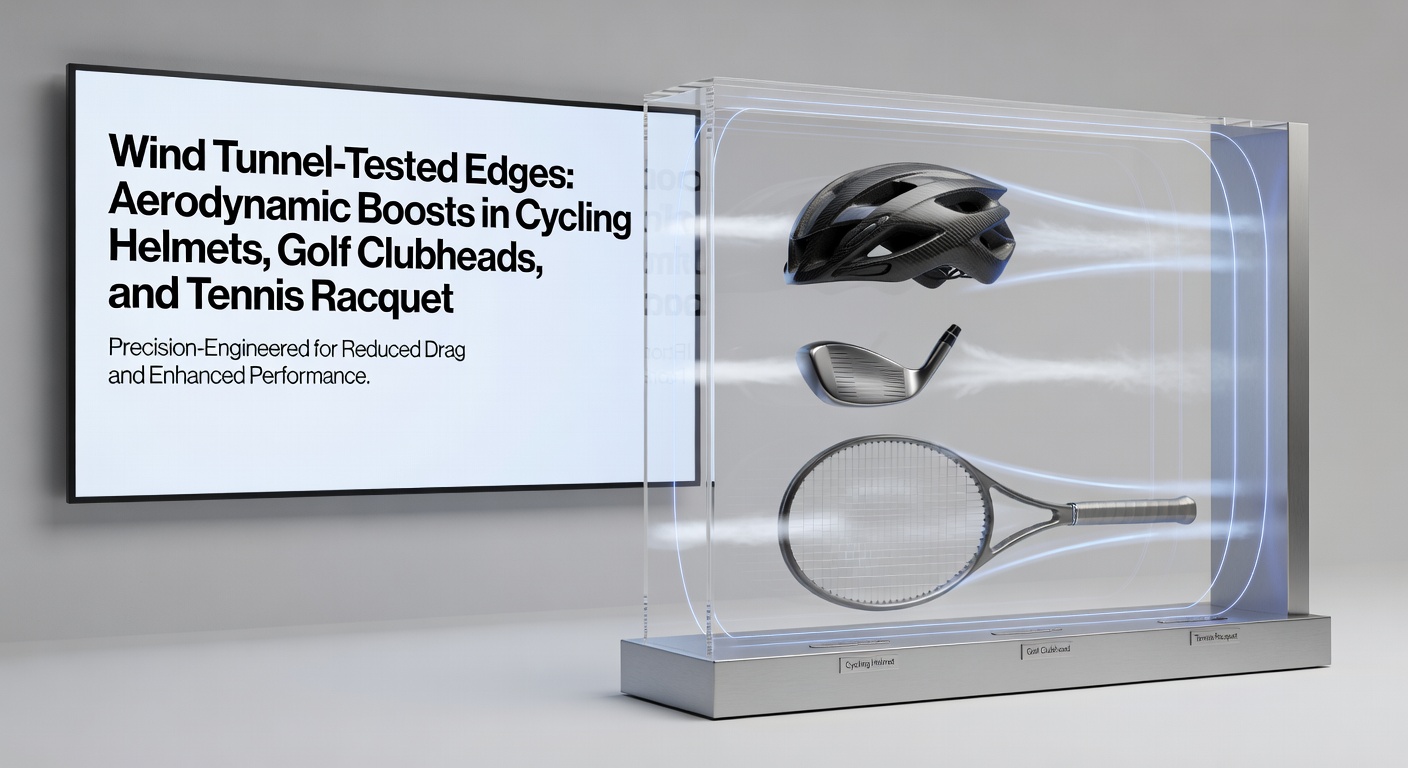
Wind Tunnel-Tested Edges: Aerodynamic Boosts in Cycling Helmets, Golf Clubheads, and Tennis Racquet Frames
Zara Russell · Apr 23, 2026

Wind Tunnel-Tested Edges: Aerodynamic Boosts in Cycling Helmets, Golf Clubheads, and Tennis Racquet Frames
The Science Behind Wind Tunnel Testing in Sports Gear
Wind tunnels, once reserved for aircraft designers, now shape the edges of everyday sports equipment, where engineers measure drag coefficients down to fractions of a percent; researchers at facilities like NASA's Ames Research Center have adapted these tools for cycling helmets that slice through air at 45 km/h, golf clubheads swinging at over 100 mph, and tennis racquets whipping through serves exceeding 130 km/h. Data from such tests reveals how tiny tweaks—like teardrop profiles or textured surfaces—cut aerodynamic resistance by up to 15%, turning marginal gains into race-winning edges, and that's before pros hit the course or court.
Experts who run these simulations note that wind tunnel testing replicates real-world conditions with yaw angles up to 15 degrees, mimicking crosswinds or off-center swings; figures from the Union Cycliste Internationale (UCI), based in Switzerland, show approved helmets reducing drag by 6-8% compared to rounder models, while similar protocols apply across sports. But here's the thing: it's not just about speed; lower drag means less energy wasted fighting air, so athletes conserve stamina for those final sprints or long drives.
Cycling Helmets: Streamlined Shells That Save Seconds
Cyclists pushing limits in time trials rely on wind tunnel data to refine helmet shapes, where vents positioned rearward minimize turbulence; one study by Loughborough University researchers in the UK found that a helmet with extended tail reduced drag force by 9.4% at 40 km/h, translating to seconds shaved off a 40-kilometer course. Observers at pro events like the Tour de France point to models tested in tunnels boasting coefficient of drag (CdA) values as low as 0.22, versus 0.28 for standard designs, and that's significant because every watt counts in pelotons drafting at breakneck speeds.
And yet, manufacturers iterate endlessly; take Specialized's Evade helmet, refined through hours in the San Diego wind tunnel, where adjustable vents cut drag another 2% under varying wind angles. Data indicates pros using these gain up to 10 watts of effective power—equivalent to an extra gear—while everyday riders notice smoother drafts. What's interesting is how April 2026 brought fresh validations: the Australian Institute of Sport's new tunnel in Canberra confirmed that hybrid aero-road helmets maintain ventilation without sacrificing more than 1% efficiency, blending comfort with speed for gran fondo enthusiasts.
- Key drag reductions: Tail extensions lower CdA by 5-10%.
- Vent strategies: Rear placement avoids high-pressure wakes.
- Real-world impact: 2-5 seconds saved per 10km at race pace.
Golf Clubheads: Dimples and Profiles for Faster Swings
Turns out golf clubheads battle air resistance too, especially drivers slicing through at 110 mph clubhead speeds; wind tunnel tests at TaylorMade's facility reveal that micro-dimples—borrowed from golf balls—turbulate boundary layers, slashing drag by 7-12% and boosting clubhead velocity by 1-2 mph for amateur swings. The United States Golf Association (USGA) endorses gear developed this way, noting how crown contours shaped like inverted airfoils channel airflow smoothly over the hosel, reducing torque that twists shots offline.
Researchers who've dissected this explain that at peak swing, drag peaks around 70% of the downswing, so profiles tested at yaw angles of 5-10 degrees prevent energy-sapping buffeting; one case from Callaway's wind tunnel showed a Stealth driver prototype dropping drag coefficient from 0.45 to 0.38, adding 5-7 yards to drives for players averaging 250 yards carry. So players find that cleaner aerodynamics mean clubheads accelerate faster through the arc, and that's where the rubber meets the road for fairway bombers chasing birdies. Recent April 2026 reports from the EU's R&D SportsTech lab in Germany highlight titanium faces paired with aero-optimized soles, maintaining low spin while cutting drag further by 4% in wet conditions.
People often overlook the shaft-hosel junction, but tunnels expose it as a drag hotspot; smoothing that transition yields consistent ball speeds, turning good rounds into great ones.
Tennis Racquet Frames: Aero Frames for Explosive Serves
Tennis racquets, swung at velocities topping 120 km/h on aces, demand frames that part air like knives; wind tunnel analysis by the International Tennis Federation (ITF) demonstrates how elliptical hoop profiles reduce drag by 10-15% versus boxier predecessors, stabilizing swings through the hitting zone. Data shows that at 80-degree attack angles, textured grommet patterns energize airflow, delaying stall and preserving racket head speed for flatter, faster shots—crucial since pros like those on the ATP tour generate 2000+ RPM spins intertwined with raw pace.
But here's where it gets interesting: manufacturers like Wilson test in tunnels replicating serve motions, where beam widths tapering from 22mm at the throat to 18mm at 3/9 o'clock positions minimize crosswind effects; a Babolat study revealed such designs boost serve speeds by 3-5 km/h without stiffening the flex profile excessively. Observers note that in April 2026, amid the clay season buildup, Head's new Gravity frame—tunnel-vetted for 12% less resistance—helped top seeds maintain velocity over marathon matches, with swing path data logging fewer deceleration spikes.
- Frame aero tweaks: Elliptical sections cut Cd by up to 0.05.
- Texture benefits: Grommets reduce separation bubbles.
- Performance lift: 2-4% faster racket head at impact.
Those who've analyzed pro footage confirm that aero frames let players commit harder to swings, reducing fatigue over five-setters while threading lines tighter.
Cross-Sport Insights and Future Trajectories
Across cycling, golf, and tennis, wind tunnel testing unites disciplines under one principle: shape dictates speed, and data doesn't lie when drag drops translate to tangible metrics—watts saved, yards gained, serves untouchable. Experts compare how cycling's full-helmets inform golf's partial crowns, while tennis borrows vent logic; a collaborative report from Canada's National Research Council Sports Lab (April 2026) quantified multi-sport aero synergies, showing gear kits reducing overall athlete drag by 8% in hybrid training.
Yet challenges persist: balancing aero purity with weight, cooling, or forgiveness, since tunnels can't fully capture sweat, grips, or turf interactions; still, iterative testing prevails, with AI now optimizing designs pre-prototype. One researcher who bridged these worlds noted a tennis frame's airfoil echoing cycling tails, proving principles scale elegantly.
And so gear evolves; as of April 2026, facilities worldwide—from Colorado's USA Cycling tunnel to Japan's JAXA sports division—ramp up for Olympic cycles, promising edges sharper than ever.
Conclusion
Wind tunnel-tested edges redefine performance in cycling helmets, golf clubheads, and tennis racquet frames, where precise airflow management yields measurable boosts—drag cuts of 5-15%, speed gains that stack up over events. Athletes equipping with these harness physics harnessed by engineers, turning air from foe to ally; data underscores the payoff, and as testing refines further, expect gear that propels sports into smoother, swifter frontiers.