The Intersection of Biomechanical Data and Custom Sizing Algorithms in Developing Supportive Structures for Athletes Across Endurance, Team, and Racket Disciplines
Lars Schröder · Aug 22, 2026
The Intersection of Biomechanical Data and Custom Sizing Algorithms in Developing Supportive Structures for Athletes Across Endurance, Team, and Racket Disciplines
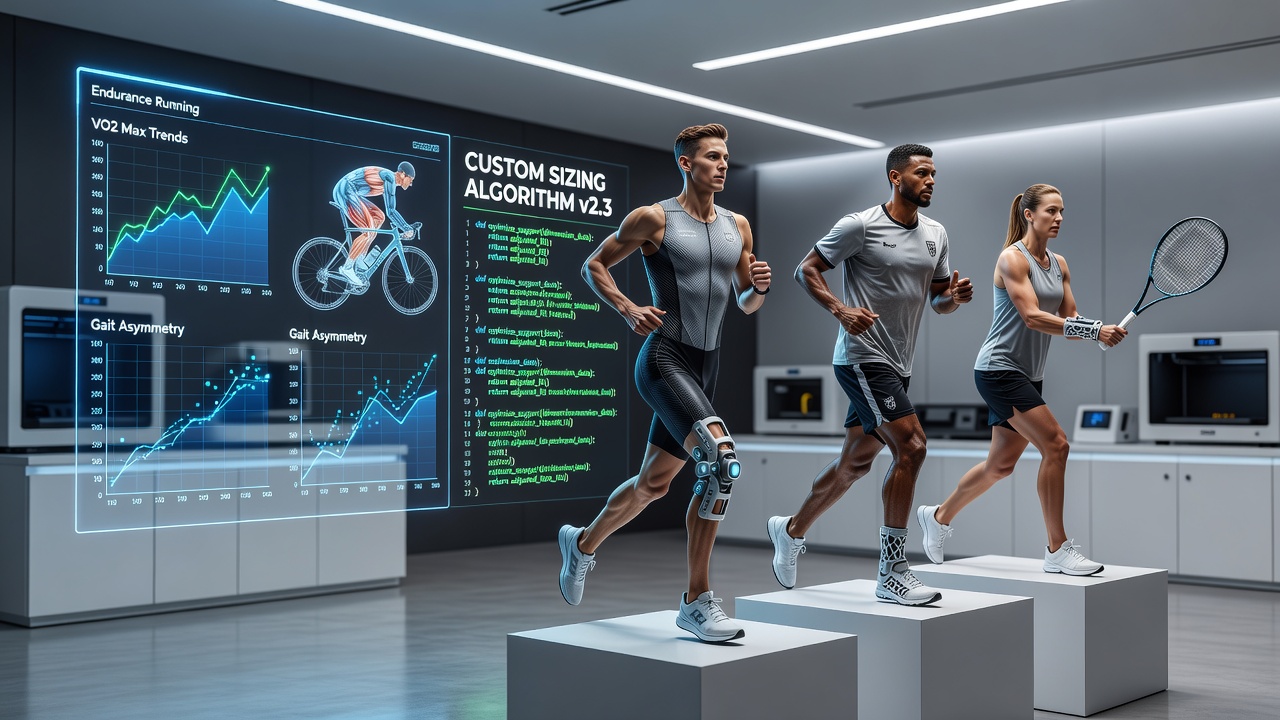
Biomechanical data collection now drives the creation of supportive structures that fit athletes in endurance running, team ball sports, and racket games, with motion capture systems, pressure sensors, and force platforms feeding information directly into sizing algorithms that generate personalized braces, insoles, and joint supports.
Researchers gather three-dimensional joint angles, ground reaction forces, and muscle activation patterns during sport-specific movements, then those datasets enter machine learning models that predict optimal dimensions for each piece of equipment while accounting for individual skeletal proportions and movement signatures.
Endurance athletes benefit when algorithms translate running gait data into custom orthotic shapes that reduce peak tibial stress, and studies from the University of British Columbia show how such structures adjust heel-to-toe drop and arch height based on thousands of stride cycles recorded per athlete.
Data Collection Methods Across Disciplines
Team sport participants, including soccer and basketball players, provide data through repeated cutting, jumping, and lateral shuffle tests, where inertial measurement units capture trunk lean and knee valgus angles that algorithms then use to design ankle and knee supports with variable stiffness zones.
Racket sport athletes contribute swing and serve kinematics that reveal wrist extension ranges and shoulder rotation velocities, allowing sizing systems to produce forearm splints and elbow counterforce bands contoured to those exact measurements rather than standard sizes.
August 2026 marks the rollout of updated sensor fusion protocols at several Olympic training centers, where combined optical and wearable data streams now update custom sizing models in near real time during practice sessions.
Algorithmic Customization Process
Custom sizing algorithms operate through iterative fitting loops that compare predicted pressure maps against measured outcomes, adjusting parameters for material thickness, strap tension, and contour curvature until the supportive structure matches the athlete's biomechanical profile within defined tolerance thresholds.

Software platforms integrate finite element analysis to simulate how each design modification alters load distribution during sport movements, and this step helps manufacturers refine prototypes before physical production begins.
Evidence from the Australian Institute of Sport indicates that algorithm-driven supports reduce reported discomfort scores in distance runners while maintaining or improving running economy metrics compared with off-the-shelf alternatives.
Applications in Specific Sports
In endurance events the focus remains on longitudinal arch support and forefoot cushioning that adapts to fatigue-induced changes in foot shape over long distances, whereas team sport structures emphasize lateral stability and quick-release mechanisms that accommodate rapid direction changes.
Racket disciplines require supports that permit full range of motion at the elbow and wrist yet limit excessive hyperextension, and sizing algorithms incorporate grip size data alongside swing path information to position reinforcement panels accordingly.
Cross-discipline sharing of data libraries has accelerated since 2024, allowing models trained on endurance gait cycles to inform team sport ankle designs when similar inversion-eversion patterns appear in both datasets.
Implementation and Measurement Outcomes
Professional teams and national federations now embed these systems in pre-season assessments, with follow-up scans scheduled at regular intervals to account for changes in body composition or technique that might require support updates.
Regulatory bodies in Canada and the European Union have begun reviewing standards for data privacy when biomechanical profiles are stored and processed by third-party manufacturers, ensuring athlete consent protocols align with existing medical device guidelines.
Conclusion
The combination of detailed biomechanical measurements and responsive sizing algorithms continues to expand the range of supportive structures available to athletes in endurance, team, and racket sports, with ongoing refinements driven by larger datasets and improved modeling techniques that address individual performance and injury mitigation needs.