Sensor Integration Timelines in Gear Prototypes for Precision Feedback Across Football, Golf, and Swimming Disciplines
Jonas Schmitt · May 30, 2026
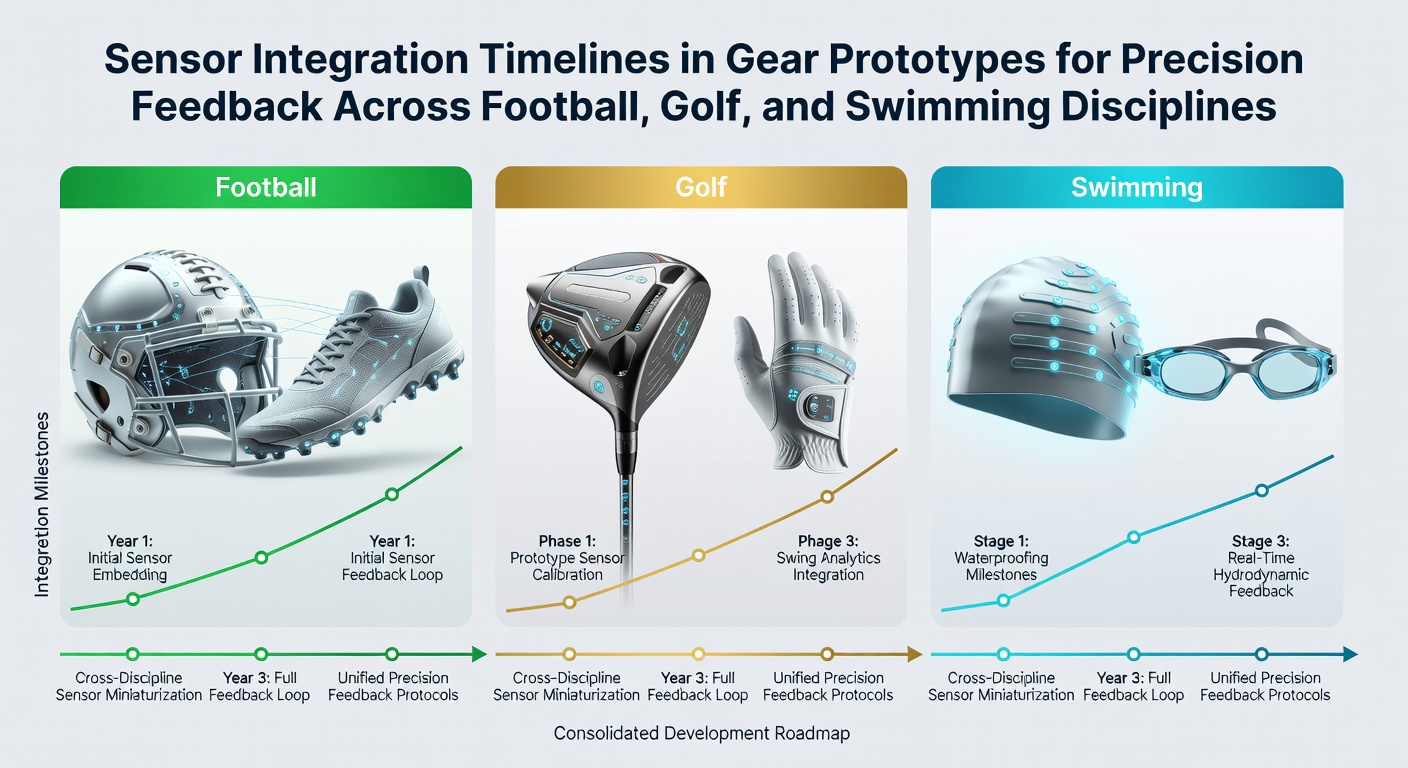
Sensor Integration Timelines in Gear Prototypes for Precision Feedback Across Football, Golf, and Swimming Disciplines
Development of sensor-equipped prototypes has followed distinct paths in football, golf, and swimming since the early 2000s, with each discipline incorporating accelerometers, gyroscopes, and pressure detectors at different rates to capture motion data and deliver real-time feedback. Researchers at institutions across North America and Europe have documented these shifts through successive prototype iterations that refined data accuracy and reduced device weight.
Football Equipment Evolution
Football helmet prototypes first integrated basic impact sensors around 2005 when university labs attached accelerometers to measure linear forces during collisions, and by 2012 multiple teams tested wireless versions that transmitted data to sideline monitors while players remained on the field. Later phases added gyroscopic elements by 2018 to track rotational acceleration, and current timelines project full integration of multi-axis sensor arrays into production models by May 2026 according to reports from the National Science Foundation on wearable sports technology. Shoulder pad prototypes followed a parallel schedule, with early pressure-mapping systems appearing in 2010 trials and advanced versions now capturing muscle engagement metrics through embedded textile sensors.
Golf Club and Ball Prototypes
Golf shaft prototypes adopted strain-gauge sensors in 2008 to quantify flex and torque during swings, allowing engineers to log clubhead speed and face angle data that previously required external cameras. Clubhead designs incorporated nine-axis inertial measurement units by 2015, and ball prototypes gained embedded micro-sensors around 2019 that record spin rates and launch trajectories upon impact. Industry analyses from the European Commission’s sports innovation programs indicate that combined club-and-ball systems reached prototype maturity by 2023, with ongoing refinements focused on battery longevity and waterproofing for outdoor conditions.
Swimming Gear Developments
Swimming cap and goggle prototypes introduced waterproof accelerometers in 2010 to monitor stroke rate and body rotation, while full-body suit integrations appeared by 2016 with pressure sensors along the torso to detect propulsion efficiency. Research conducted at Australian universities documented how these devices evolved to include heart-rate electrodes by 2021, producing continuous biometric streams during pool sessions. Current prototype roadmaps point toward unified sensor networks in training suits that synchronize data across multiple swimmers by late 2025, setting the stage for standardized feedback platforms expected in 2026.
Cross-Discipline Timeline Patterns
Comparative studies reveal that football prototypes advanced fastest in impact detection because of safety regulations, whereas golf emphasized swing kinematics and swimming prioritized hydrodynamic metrics. Data collected between 2014 and 2024 shows average sensor miniaturization rates of 15 percent per year across all three sports, enabling smaller form factors that athletes accept during extended use. Observers note that shared component suppliers accelerated progress when the same micro-electromechanical systems migrated from one discipline’s prototypes to another within two to three years.
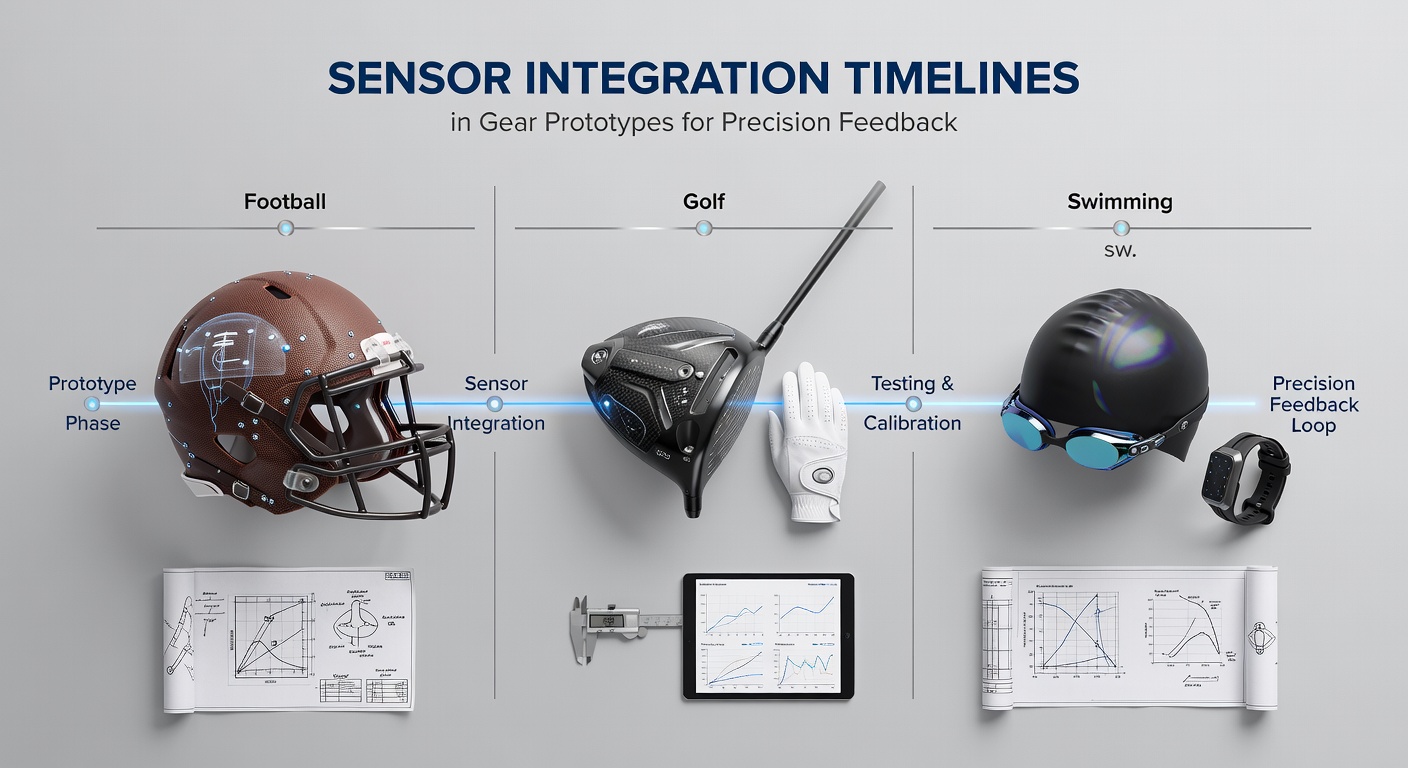
Standardization efforts gained momentum after 2020 when international federations began reviewing data formats, and prototype testing protocols now require calibration against laboratory motion-capture systems before field deployment. Figures from the National Science Foundation indicate that wireless transmission reliability in wet and high-impact environments improved from 78 percent in 2017 prototypes to 94 percent in 2024 versions. Meanwhile, engineers continue addressing power consumption challenges by testing energy-harvesting materials that draw from athlete movement itself.
Current Prototype Milestones Approaching 2026
As of May 2026 several combined sensor platforms have entered final validation stages, with football helmets transmitting both impact and positional data simultaneously, golf clubs logging club-ball interaction metrics in a single session, and swimming gear delivering stroke-phase breakdowns to coaches via tablet interfaces. Academic papers published through Loughborough University’s sports technology group document how these milestones emerged from iterative testing cycles that each lasted 18 to 24 months. Integration timelines now focus on user-interface design rather than sensor hardware, because raw data streams already exceed the processing capacity of many portable receivers.
Conclusion
Prototype development across football, golf, and swimming has produced measurable gains in data precision and device durability, driven by incremental hardware improvements and coordinated testing programs. Continued refinement through 2026 is expected to deliver production-ready systems that supply consistent, sport-specific feedback while meeting regulatory and performance requirements in each discipline.