Nature-Inspired Textures Transform Athletic Footwear and Protective Layers
Zara Russell · Jul 30, 2026
Nature-Inspired Textures Transform Athletic Footwear and Protective Layers
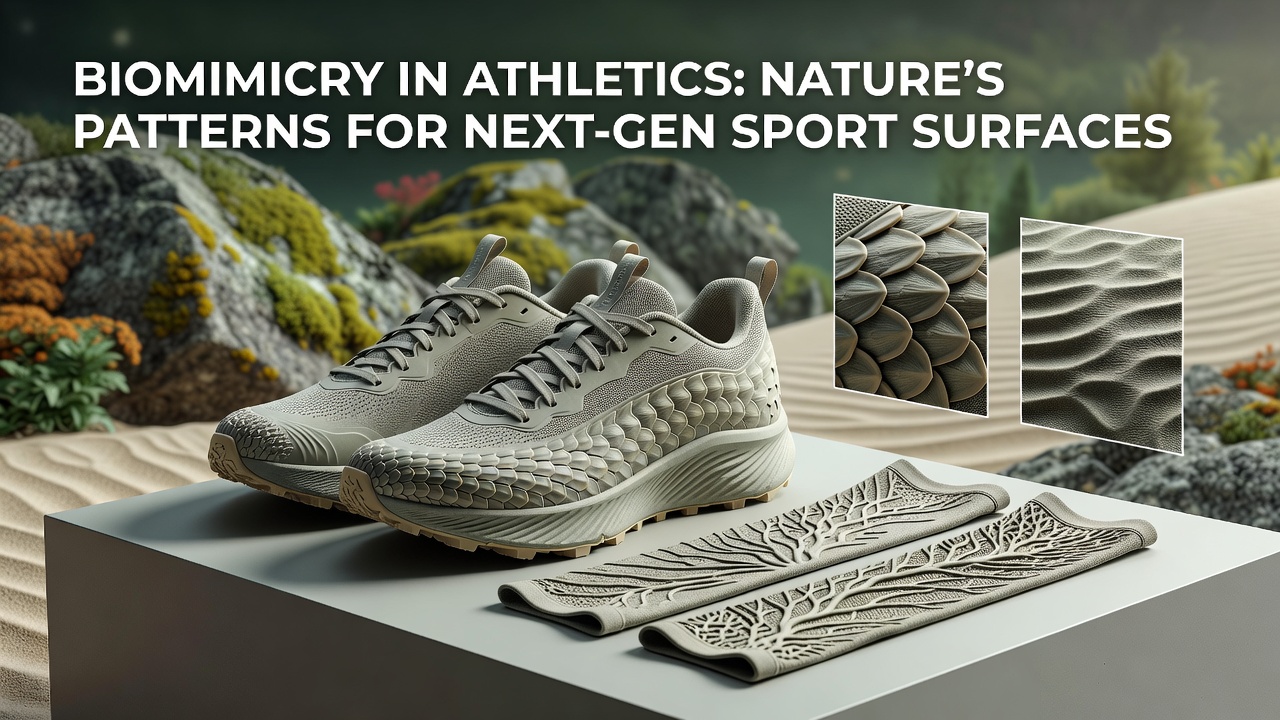
Biomimicry applies observed patterns from biological systems to engineered surfaces, and researchers continue to adapt these approaches for athletic equipment that must perform across changing conditions. Surface textures derived from marine and terrestrial organisms now appear in footwear outsoles, midsole channels, and outer protective shells used by athletes who switch between running trails, cycling roads, and contact training sessions. These modifications target grip retention, debris shedding, and moisture management without relying on chemical additives.
Shark Skin and Fish Scale Patterns in Traction Design
Studies from the National Research Council Canada document how overlapping micro-ridges similar to those on shark dermal denticles reduce drag while maintaining contact on wet or loose surfaces. Footwear developers have incorporated staggered, V-shaped ridges into trail and multi-terrain outsoles, allowing athletes to retain forward propulsion during transitions from pavement to gravel or wet grass. Data collected during field trials in British Columbia showed measurable decreases in slip events when these textures replaced conventional lug patterns under equivalent load and velocity conditions.
Gecko Adhesion and Lotus Leaf Repellency Combined
Researchers at the University of Melbourne have examined how seta-like fibrillar arrays, modeled after gecko toe pads, can be scaled for temporary adhesion on smooth rock or indoor climbing surfaces while remaining releasable. When paired with hierarchical micro-papillae that replicate lotus leaf self-cleaning properties, the resulting hybrid texture appears in protective knee and elbow layers for cyclists and boxers who train outdoors. Water contact angle measurements reported in peer-reviewed journals indicate that these combined surfaces shed moisture and fine particles more rapidly than smooth polymers, reducing weight gain during prolonged exposure to rain or mud.
Application Across Variable Environments
Athletes competing in regions with rapid weather shifts require equipment that adapts without mechanical adjustment. Textured channels inspired by pine cone scale movement allow ventilation pathways to open or close in response to temperature differentials, a feature now integrated into mid-layers worn beneath protective shells. In July 2026, several European manufacturers plan to release updated multi-sport footwear lines featuring these passive-response textures tested across alpine and coastal routes. Observers note that the same sole units serve distance runners, gravel cyclists, and boxing footwork drills because the directional ridges provide consistent bite regardless of substrate moisture content.
Snake Scale and Beetle Shell Influences on Protective Shells
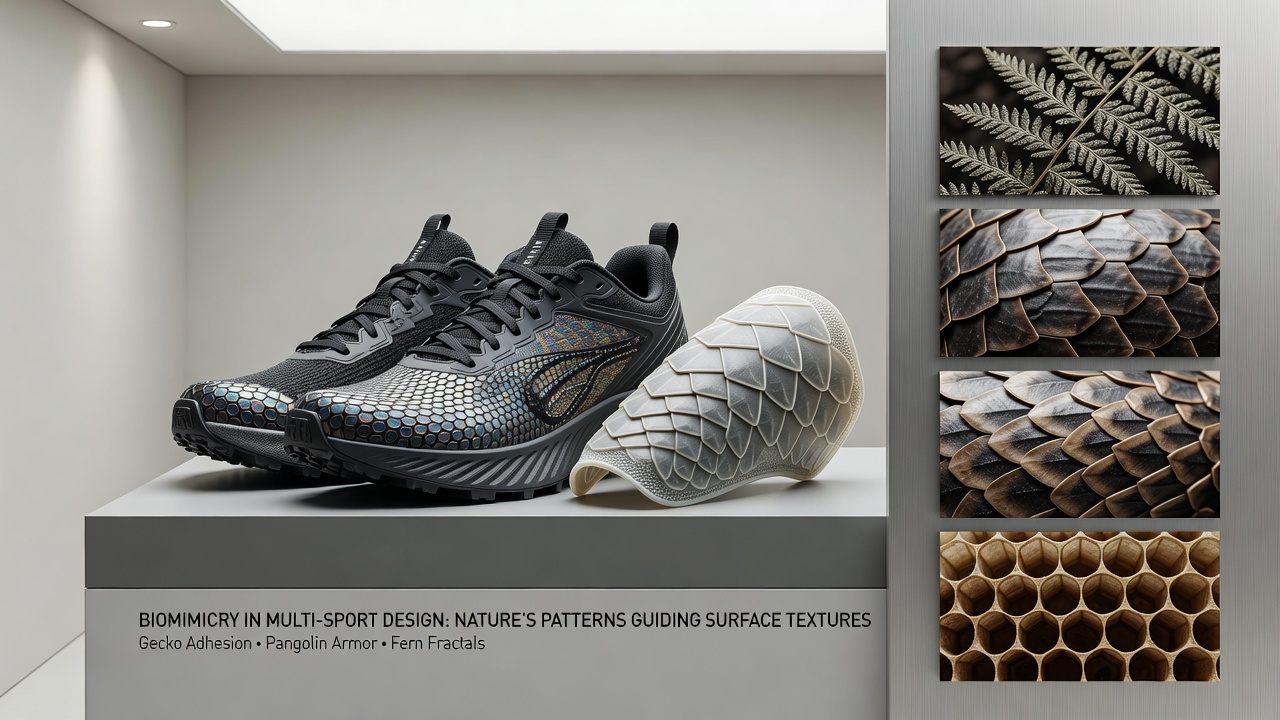
Protective layers for contact sports incorporate overlapping plate geometries drawn from snake ventral scales, permitting flex while distributing impact forces across a larger area. Australian research groups have quantified how these micro-overlaps reduce peak pressure transmission compared with monolithic foam sheets during repeated strikes. Beetle elytra structures, known for high strength-to-weight ratios and impact dispersion, inform the internal ribbing of shin and forearm guards used by multi-sport athletes. Laboratory compression tests show that these ribbed composites maintain integrity after thousands of loading cycles, a performance metric tracked by equipment standards organizations in both North America and the European Union.
Integration with Existing Manufacturing Processes
Manufacturers achieve these textures through precision molding and laser etching rather than secondary coatings, preserving recyclability at end of life. Supply chain reports indicate that polymer compounds selected for biomimetic replication maintain consistent performance across temperature ranges from sub-zero mountain conditions to tropical humidity. Athletes who rotate between disciplines report fewer equipment changes because one set of textured components handles dry pavement grip, wet trail traction, and impact protection during sparring sessions.
Conclusion
Continued refinement of biomimetic surface textures draws directly from documented biological structures, delivering measurable functional gains in footwear and protective equipment for athletes operating in variable environments. Ongoing studies track long-term durability and environmental exposure effects, providing data that guides iterative design cycles across multiple sports.