Motion Capture Data Guides Iterative Equipment Adjustments in Racket, Club, and Court Sports
Zara Russell · Aug 24, 2026
Motion Capture Data Guides Iterative Equipment Adjustments in Racket, Club, and Court Sports
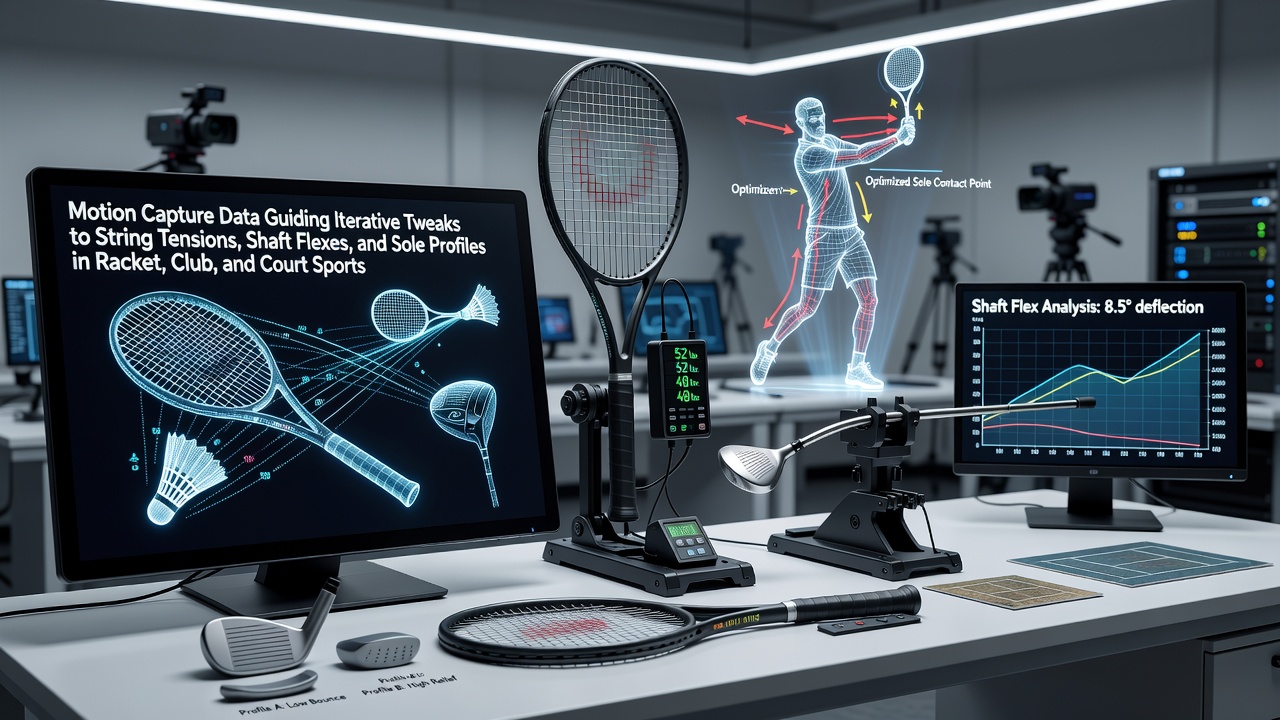
Engineers and biomechanics teams rely on motion capture systems to record precise athlete movements during racket swings, club strikes, and court maneuvers, then apply that data to refine string tensions, shaft flexes, and sole profiles through repeated testing cycles. These systems deploy high-speed cameras and sensor arrays that capture thousands of data points per second, allowing analysts to map force distributions across equipment components in real time. Data from these sessions feeds directly into design software that models how small changes affect ball speed, spin rates, and player stability.
Data Collection in Racket Sports
Researchers set up calibrated camera arrays around players executing serves and groundstrokes, recording string bed deformation at impact points across multiple racket models. Studies from the Australian Institute of Sport demonstrate that tension adjustments of 2 to 4 pounds alter rebound coefficients by measurable margins when players generate topspin above 3000 rpm. Teams then cycle through prototypes, tightening mains while loosening crosses, and retest until launch angle consistency improves across forehand and backhand sequences. Observers note that professional circuits increasingly integrate these protocols during off-season training blocks, particularly as new sensor-equipped rackets transmit live feedback to coaching staff.
Shaft Flex Refinements in Club Sports
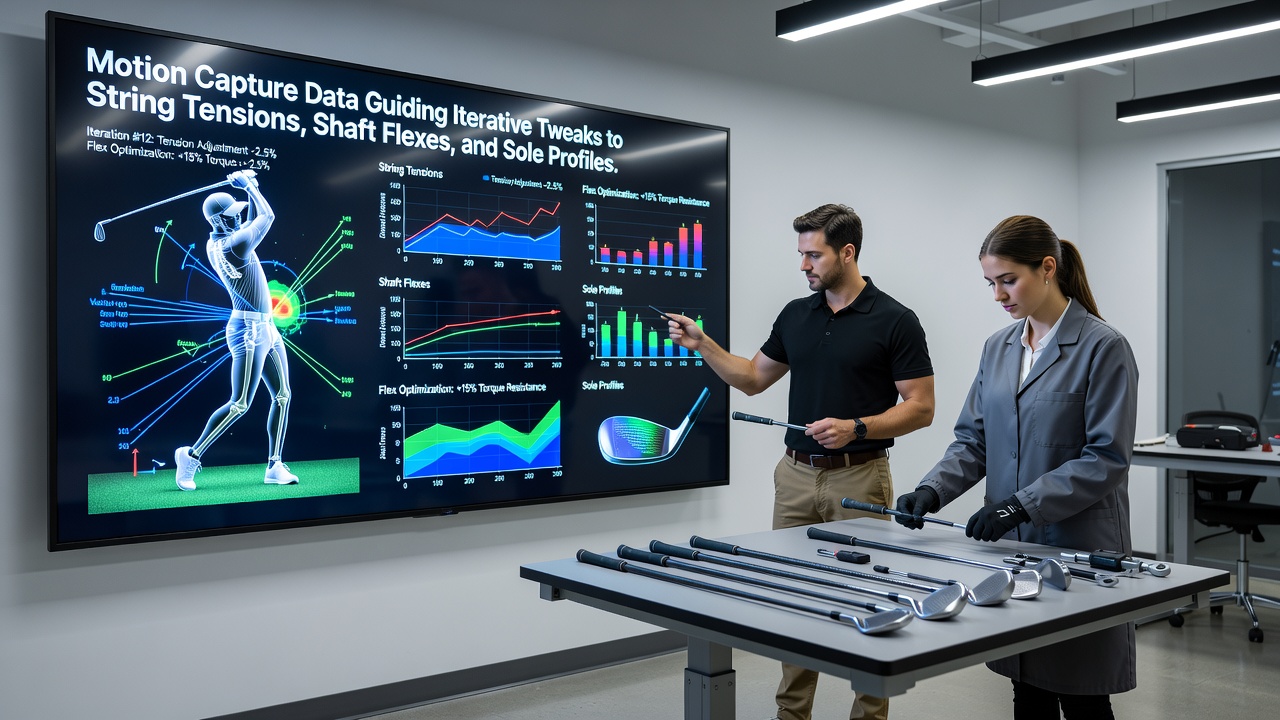
Golf equipment developers apply similar capture techniques to track shaft bending and torsion during downswing phases, focusing on how flex profiles interact with clubhead speed and attack angles. Motion data reveals that players with transition speeds exceeding 120 mph benefit from stiffer mid-sections that reduce energy loss at the kick point, while slower transitions respond better to softer tips that promote higher launch without added loft. Iterative lab sessions compare carbon fiber layups against baseline steel shafts, measuring dispersion patterns on launch monitors after each modification round. August 2026 testing schedules at major fitting centers incorporate updated algorithms that correlate shaft oscillation frequencies with ground reaction forces captured from force plates beneath the player.
Sole Profile Adjustments for Court Sports
Court athletes generate lateral forces during cuts and pivots that motion capture systems quantify through foot placement vectors and pressure mapping. Engineers examine how sole curvature and tread depth influence traction coefficients on hard surfaces, then adjust medial and lateral edges to reduce slippage while maintaining release timing. Data sets from basketball adn tennis players show that beveled profiles lower peak shear forces by 12 to 18 percent in repeated change-of-direction drills, prompting manufacturers to iterate on midsole compounds and outsole geometries in successive prototypes. Teams feed these metrics back into 3D printing stations that produce test units within hours for immediate re-evaluation.
Cross-sport comparisons highlight shared challenges where motion data reveals overlapping stress patterns, such as torsional loads on racket handles mirroring those on golf grips during release. Analysts combine datasets from multiple disciplines to identify universal flex thresholds that inform hybrid material choices across categories. One study coordinated through Canadian university labs tracked elite athletes across tennis and golf sessions, documenting how sole modifications on court shoes influenced stance stability that carried over to improved club control in subsequent swings. These findings drive manufacturers to align testing calendars so that tension, flex, and profile tweaks advance in parallel development streams rather than isolated silos.
Iterative Testing Protocols
Protocols unfold in structured phases where initial capture runs establish baseline kinematics, followed by targeted equipment alterations and immediate follow-up trials. Software platforms overlay successive motion trails to quantify reductions in unwanted wrist flexion or hip sway after each round of changes. Industry reports from the European Sports Engineering Association indicate that four to six iteration cycles typically yield measurable gains in consistency metrics before diminishing returns set in. Facilities now run parallel sessions using both marker-based optical systems and inertial measurement units, cross-validating results to account for any sensor drift during extended testing days. This layered approach ensures adjustments remain grounded in reproducible data rather than subjective feel alone.
Conclusion
Motion capture continues to anchor equipment evolution by supplying objective metrics that guide precise modifications to string tensions, shaft flexes, and sole profiles across racket, club, and court applications. Continued integration of these tools supports tighter correlations between athlete movement patterns and final product specifications, with ongoing research expanding the range of variables captured in each testing cycle.