Inside the Laboratories Where Sports Equipment Undergoes Extreme Testing Protocols Before Reaching Stores
Lars Schröder · May 21, 2026
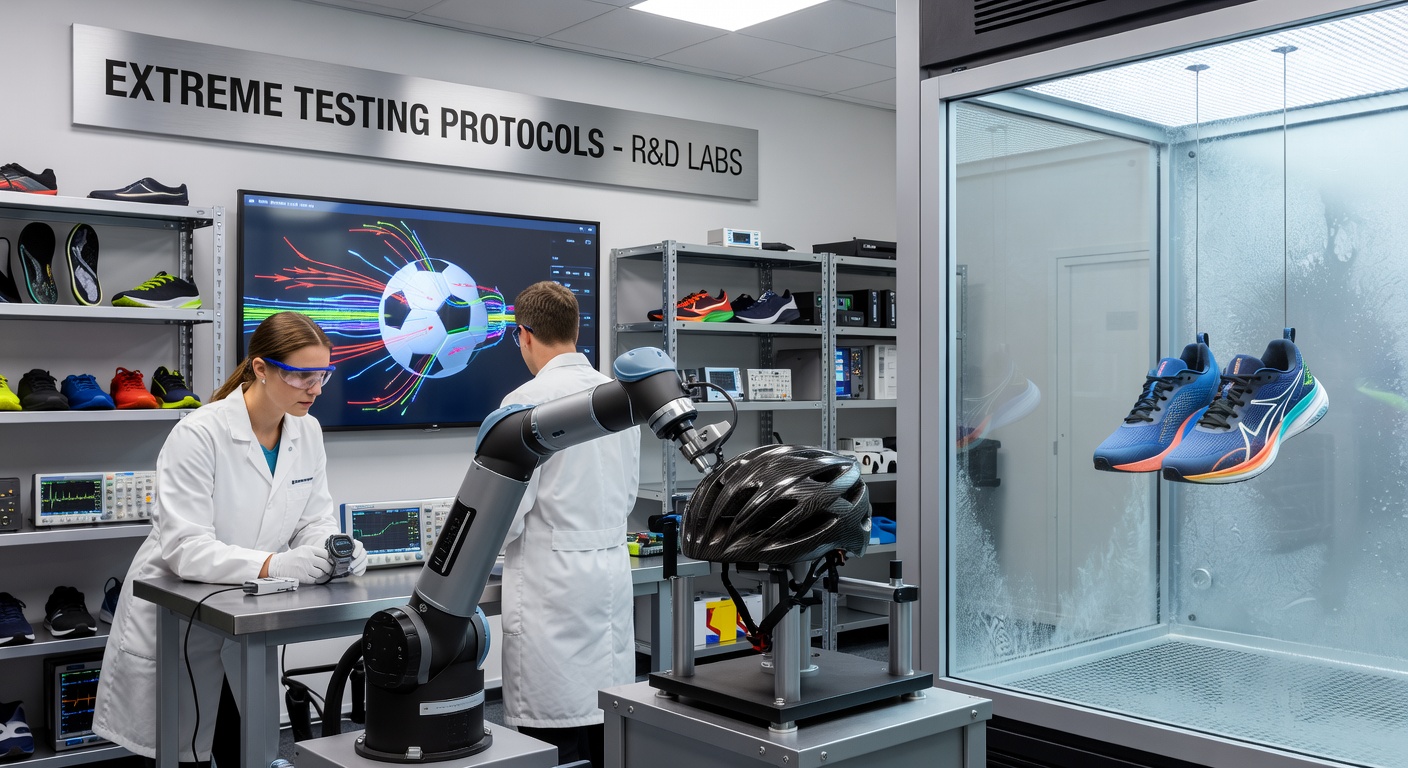
Inside the Laboratories Where Sports Equipment Undergoes Extreme Testing Protocols Before Reaching Stores
Specialized facilities across multiple continents run rigorous evaluation sequences on balls, bats, helmets, and protective apparel long before any product appears on retail shelves, and these processes combine mechanical stress machines with climate-controlled chambers that replicate conditions from arctic winds to desert heat. Researchers at independent testing centers and manufacturer-owned labs follow standardized methods developed by organizations such as ASTM International, where equipment must survive thousands of repeated impacts or extended exposure to ultraviolet radiation while sensors record changes in structural integrity and performance metrics.
Core Testing Chambers and Equipment
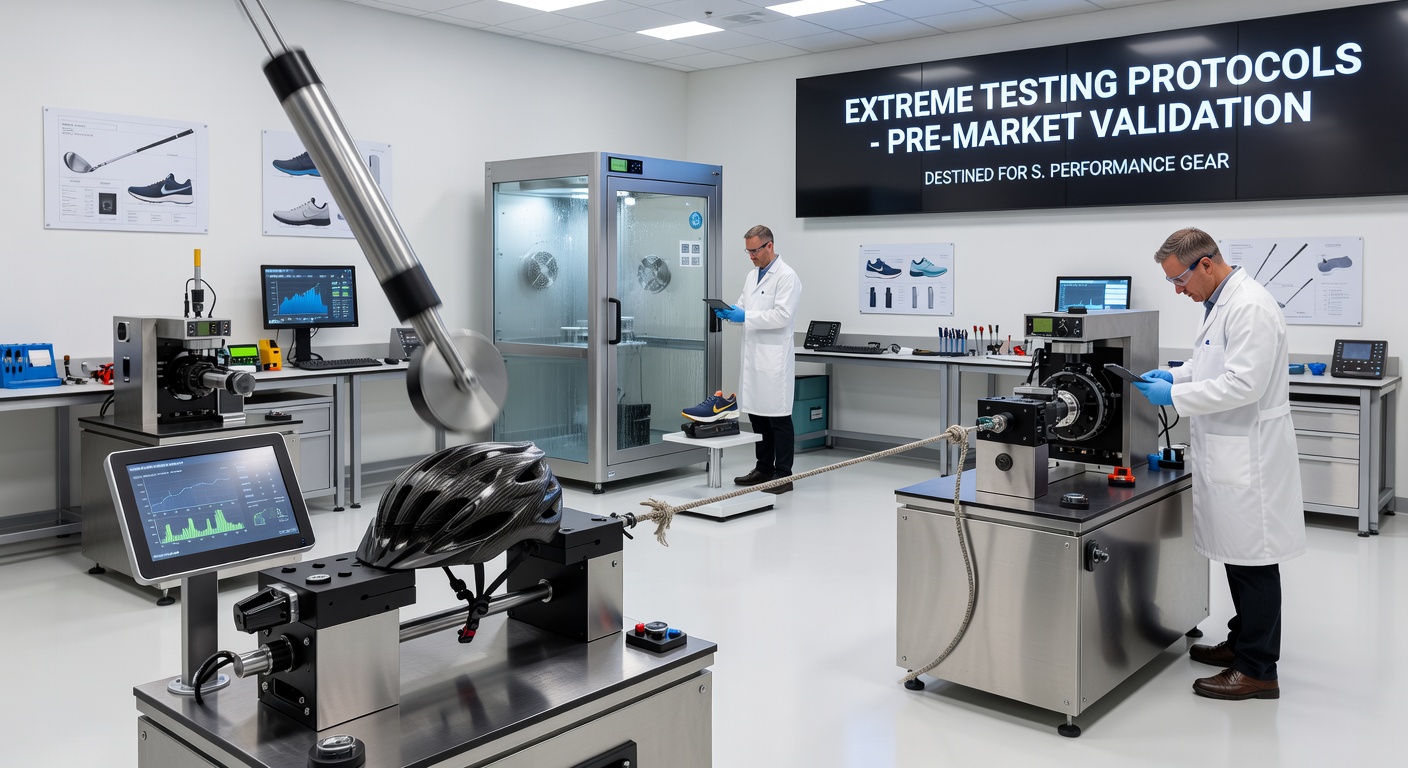
Walk into any major laboratory and observers note rows of drop towers that release weighted projectiles onto helmets or shin guards at speeds matching professional game scenarios, while adjacent rooms house abrasion wheels that grind against fabric surfaces for hours on end to measure wear rates. Environmental simulators cycle temperatures between minus 20 and plus 50 degrees Celsius within single test runs, allowing technicians to observe how materials expand or contract when sudden shifts occur. Data acquisition systems capture force measurements in milliseconds, and software compiles results into reports that determine whether a given design meets safety thresholds set by regulatory bodies.
Impact and Fatigue Protocols
One prominent facility subjects composite baseball bats to cyclic loading rigs that deliver 500 strikes per minute for continuous periods, tracking deflection angles and energy return after each sequence until predefined failure criteria appear. Similar rigs apply rotational torque to golf club heads while cameras record micro-fractures forming along seams, and the entire sequence runs under controlled humidity levels that simulate both rainy fairways and dry driving ranges. These repeated stress applications reveal fatigue points that single-impact tests often miss, providing manufacturers with precise timelines for material degradation.
Protective eyewear undergoes high-velocity projectile launches from air cannons calibrated to mimic puck speeds in ice hockey or ball velocities in cricket, with polycarbonate lenses required to remain intact after multiple direct hits at varying angles. Meanwhile separate stations evaluate stitching on gloves and pads by pulling seams apart at constant force until separation occurs, generating quantitative data on thread strength and attachment methods.
Environmental Simulation and Material Analysis
Chambers that replicate prolonged sunlight exposure use xenon arc lamps calibrated to international standards, and researchers measure color fade alongside tensile strength loss after hundreds of hours of continuous irradiation. Salt spray cabinets subject metal components in bicycles or racquets to corrosive atmospheres that accelerate rust formation, allowing teams to predict long-term performance in coastal regions. Chemical analysis sections employ spectroscopy equipment to verify that no restricted substances remain in finished products, satisfying import regulations in markets from North America to the Asia-Pacific region.
During May 2026 several laboratories updated their humidity cycling programs to incorporate more rapid transitions between wet and dry states, reflecting new field data collected from athletes training in tropical climates. These adjustments produce test profiles that better match real-world usage patterns observed across professional leagues, and results feed directly into revised durability predictions shared with design teams.
Certification Pathways and Global Standards
After internal evaluations conclude, samples move to accredited third-party labs for final verification against criteria published by Standards Australia and the International Organization for Standardization. Reports issued by these organizations confirm compliance before any shipment leaves the factory floor. Observers note that certification timelines typically span four to eight weeks once prototypes enter the final testing queue, during which additional random sampling occurs to guard against production variations.
Ball rebound tests measure coefficient of restitution values for soccer and basketball equipment under both indoor and outdoor temperature conditions, while friction rigs assess surface interactions between footwear and standardized playing surfaces. Each data point contributes to a comprehensive dossier that regulators review before granting market access.
Conclusion
Through coordinated sequences of mechanical loading, climate exposure, and chemical verification, laboratories establish performance baselines that protect end users and maintain consistent product quality across global supply chains. The protocols continue evolving alongside new material formulations and changing athletic demands, ensuring that equipment reaching stores has already demonstrated resilience under conditions far exceeding typical recreational use.