How Textile Weave Densities Influence Moisture Wicking Rates Across Swimwear, Cycling Jerseys, and Volleyball Uniforms in Humid Training Conditions
Jonas Schmitt · Aug 13, 2026
How Textile Weave Densities Influence Moisture Wicking Rates Across Swimwear, Cycling Jerseys, and Volleyball Uniforms in Humid Training Conditions
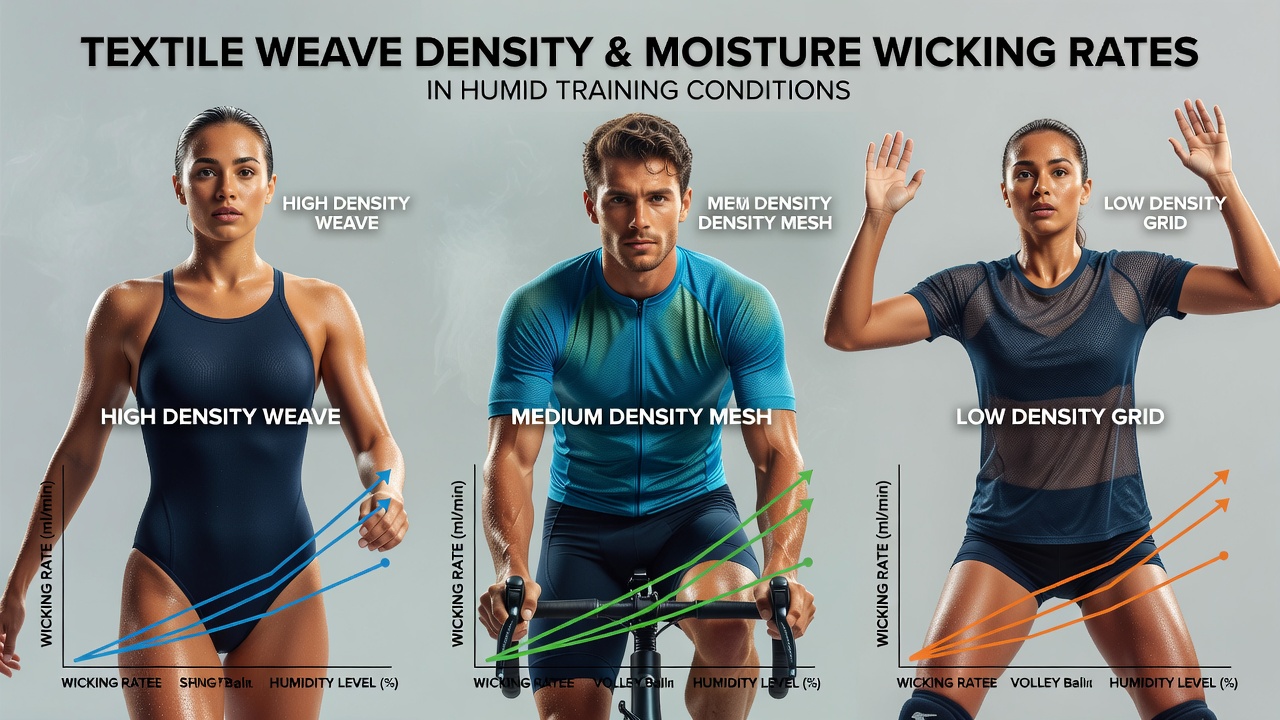
Textile weave density refers to the number of threads per square inch in a fabric, and this structural factor directly shapes how moisture moves through athletic garments during training in humid environments where air saturation slows evaporation. Researchers have measured that tighter weaves with higher thread counts create narrower capillary channels, which can accelerate initial wicking yet limit overall vapor release when humidity exceeds 70 percent, while looser weaves allow broader pathways but may retain liquid longer before transfer occurs.
Core Principles of Weave Density and Moisture Dynamics
Studies from textile laboratories indicate that plain weaves at densities above 200 threads per inch promote rapid surface spreading of sweat through increased fiber contact points, whereas satin or twill constructions at lower densities around 120 threads per inch favor slower absorption followed by quicker release into the surrounding air once saturation begins. Data collected across multiple humidity-controlled chambers shows these differences become pronounced when ambient moisture levels rise, because saturated air reduces the vapor pressure gradient that drives evaporation from the fabric surface.
Application in Swimwear Fabrics
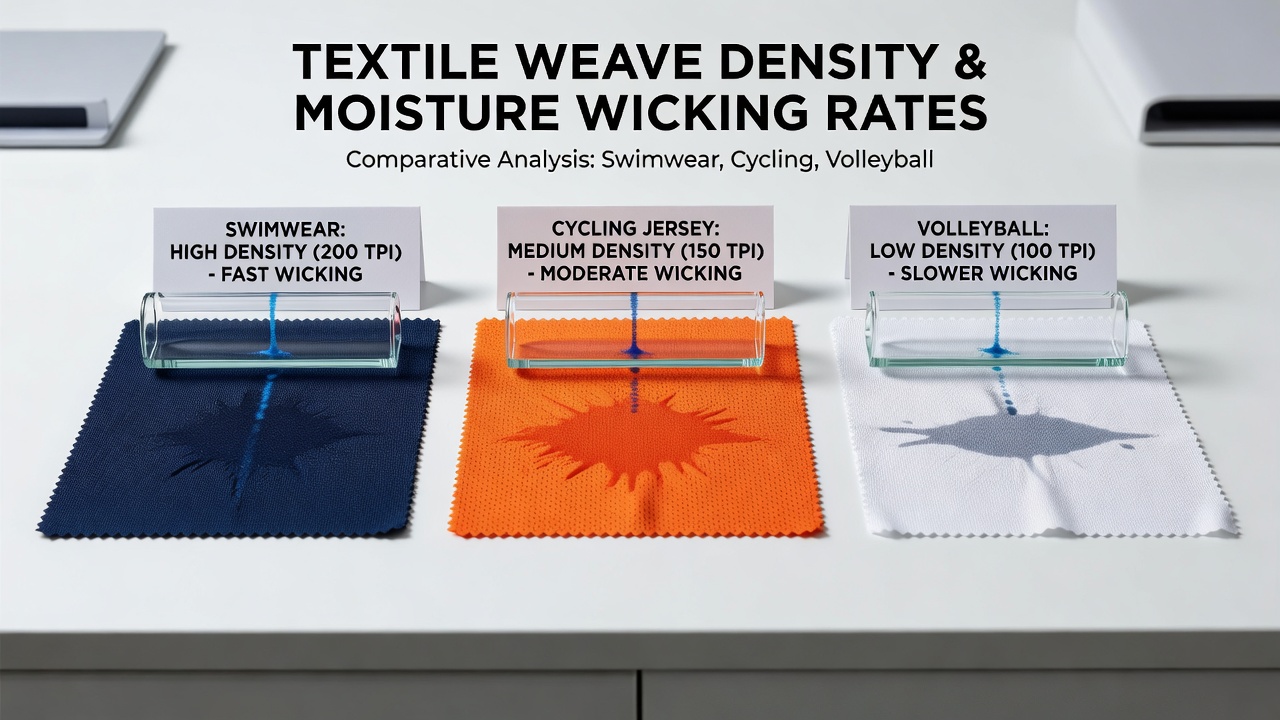
Swimwear manufacturers select high-density nylon and polyester weaves typically ranging from 180 to 220 threads per inch to achieve compression and reduced drag, and these tight constructions facilitate moisture transport away from the skin during poolside or open-water sessions in humid coastal climates. Laboratory tests reveal that such dense weaves move liquid laterally at rates up to 15 percent faster than medium-density alternatives in the first 30 seconds of contact, although prolonged exposure to 80 percent relative humidity can lead to slight saturation buildup along seam lines where thread intersections concentrate.
Performance Characteristics in Cycling Jerseys
Cycling jerseys often employ mesh panels with weave densities between 90 and 140 threads per inch integrated into main body fabrics of 160 threads per inch, creating zoned moisture management that responds to varying sweat rates across the torso and back. Field data gathered during summer training rides in subtropical regions demonstrate that these hybrid densities support continuous wicking even when humidity climbs above 75 percent, because the looser mesh sections increase air permeability and allow trapped moisture to escape before it saturates the tighter base layers.
Behavior in Volleyball Uniforms
Volleyball uniforms rely on mid-density polyester weaves around 150 threads per inch combined with strategic open-weave inserts, and these configurations balance breathability with the quick-drying demands of repeated diving and jumping movements on indoor courts where humidity from spectator crowds often exceeds 65 percent. Observers note that uniforms with slightly lower overall densities in the torso region exhibit improved vertical moisture transport, moving perspiration upward toward the shoulders at measured rates of 12 to 18 millimeters per minute under controlled humid conditions.
Impact of Humid Training Environments
August 2026 testing protocols conducted by international sports science groups confirmed that relative humidity above 70 percent compresses the effective wicking window for all three garment types, yet the magnitude of reduction varies with weave density. Tighter constructions lose 8 to 12 percent of their baseline wicking speed in high humidity, while looser weaves experience smaller drops of 4 to 7 percent because their wider channels maintain vapor pathways longer.
According to findings published by the Commonwealth Scientific and Industrial Research Organisation, fiber composition interacts with weave density so that polyester-dominant fabrics at moderate densities maintain more consistent performance across humidity swings than nylon blends at higher densities. Additional research from Canadian textile institutes highlights that mechanical finishing processes such as calendering can further modify effective density and thereby alter wicking thresholds in humid settings.
Comparative Data Across Disciplines
Side-by-side evaluations show swimwear with the highest weave densities achieves the fastest initial moisture spread but requires the most time for complete drying once saturation occurs, cycling jerseys with zoned densities deliver balanced transfer and release suitable for sustained efforts, and volleyball uniforms occupy a middle ground where moderate densities support both mobility and evaporation during intermittent high-intensity bursts. These patterns hold steady across training sessions lasting 60 to 90 minutes in environments maintained at 28 degrees Celsius and 75 percent relative humidity.
Conclusion
Textile engineers continue to refine weave densities for each sport by balancing capillary action against air permeability, and the resulting garments demonstrate measurable differences in moisture handling that become most evident under humid training loads. Ongoing laboratory work tracks how small adjustments in thread count and construction type translate into performance metrics that athletes experience directly through fabric feel and drying time.