How Regional Regulations Shape Chemical Treatments in Athletic Fabrics
Zara Russell · Jun 8, 2026
How Regional Regulations Shape Chemical Treatments in Athletic Fabrics
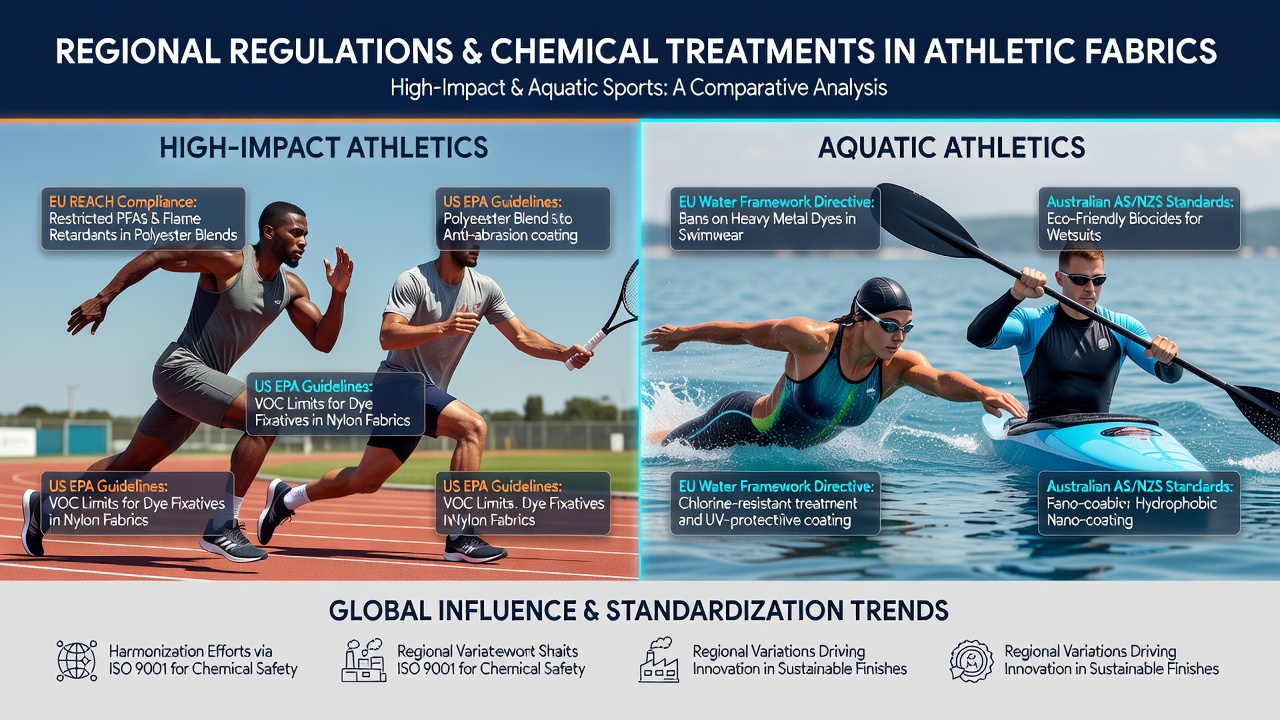
Regional regulations determine which chemical treatments manufacturers apply to fabrics used in high-impact sports such as boxing and rugby as well as aquatic disciplines including swimming and water polo, and these rules vary significantly by jurisdiction while creating distinct compliance pathways for global supply chains. Data from regulatory bodies shows that restrictions on substances like per- and polyfluoroalkyl substances (PFAS) and certain antimicrobial agents directly alter fabric performance characteristics in both categories of athletic equipment.
European Union Frameworks and Their Reach
The European Union's Registration, Evaluation, Authorisation and Restriction of Chemicals regulation, administered by the European Chemicals Agency, imposes strict limits on PFAS compounds commonly used for water-repellent finishes in swimwear and moisture-wicking treatments in high-impact protective padding, with updates scheduled for implementation phases extending into 2026 that require substitution with fluorine-free alternatives. Manufacturers supplying the European market must document compliance through detailed chemical inventories, which affects production timelines for both aquatic compression fabrics and impact-resistant textiles. Studies conducted by research institutions indicate that these rules have accelerated adoption of silicone-based and hydrocarbon repellents in European facilities, while similar fabrics destined for other regions retain traditional formulations.
North American Regulatory Variations
United States Environmental Protection Agency oversight under the Toxic Substances Control Act targets specific chemical classes in textile processing, and several states including California enforce additional Proposition 65 listing requirements that cover formaldehyde releasers and certain dyes applied to athletic gear. Canadian authorities align closely with many US standards yet maintain separate notification protocols for new chemical treatments entering the market, which creates layered compliance demands for companies producing swim caps and rash guards alongside padded compression shorts. Figures released by the EPA reveal that aquatic fabric producers have shifted toward bio-based antimicrobial agents to meet both federal and state thresholds, while high-impact sportswear suppliers report parallel adjustments in flame-retardant finishes used for certain training environments.
Asia-Pacific Approaches and Export Implications
Australian industrial chemical regulations administered through the Australian Industrial Chemicals Introduction Scheme require pre-market assessments for substances applied to performance textiles, and these assessments often reference international hazard classifications that influence fabric treatments for both swimming costumes and contact-sport apparel. In parallel, Japanese and South Korean frameworks emphasize restrictions on heavy metals in dyes, prompting exporters to standardize lower-concentration formulations across product lines serving high-impact and aquatic users. Trade data compiled by regional industry groups shows that these varying thresholds affect cost structures and material sourcing decisions, particularly when a single fabric batch must satisfy multiple destination markets simultaneously.
Impact on Fabric Performance Across Activity Types
Chemical treatments banned or restricted in one region often serve dual purposes in athletic fabrics, such as providing both water resistance for aquatic garments and stain repellency for high-impact training apparel, and the loss of these treatments forces reformulation that can alter durability metrics. Research published in textile engineering journals demonstrates measurable differences in chlorine resistance and abrasion tolerance when manufacturers replace legacy chemistries with compliant substitutes. Observers note that aquatic products experience more immediate functional changes because water-repellent properties directly influence drag coefficients, whereas high-impact fabrics see adjustments primarily in odor control and moisture management layers.
Supply Chain Adaptations Observed by Mid-2026
By June 2026 several major producers had completed phased transitions to alternative treatments documented in regulatory filings, and these shifts appear across both swimwear production lines and protective equipment manufacturing. Certification bodies report increased demand for third-party verification of chemical content, which adds documentation steps yet enables continued cross-border movement of finished goods. Data indicates that companies maintaining separate regional product variants achieve faster market access than those attempting uniform global formulations, particularly when aquatic and high-impact lines share base fabrics.
Testing Protocols and Verification Methods
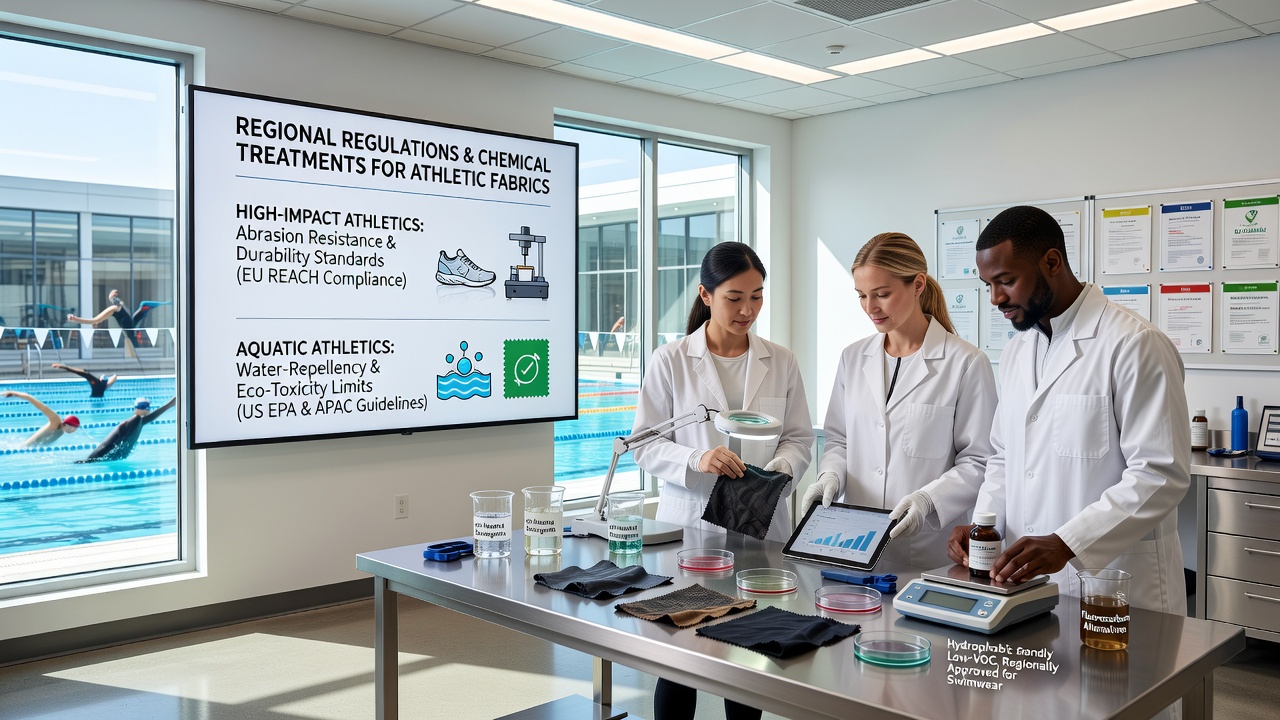
Laboratory testing regimes differ by region and often require specialized equipment to detect trace levels of restricted substances in finished textiles. Aquatic fabrics undergo repeated exposure simulations involving chlorinated water, while high-impact materials face mechanical stress protocols that evaluate treatment retention after repeated impacts. Industry reports compiled by international standards organizations highlight convergence in test methods even as permitted chemical lists remain jurisdiction-specific, which simplifies some aspects of multi-market production while preserving distinct regulatory hurdles.
Conclusion
Regional regulations continue to drive material innovation and supply chain segmentation in the athletic fabric sector, with chemical treatment choices for high-impact and aquatic applications reflecting the specific constraints of each market. Compliance documentation, alternative chemistry development, and verification testing together shape the options available to manufacturers and ultimately determine the performance characteristics of finished products reaching athletes worldwide.