How Phase-Change Materials Stabilize Body Temperatures in Athletic Gear for Multi-Sport Rotations
Vera Reed · May 23, 2026
How Phase-Change Materials Stabilize Body Temperatures in Athletic Gear for Multi-Sport Rotations
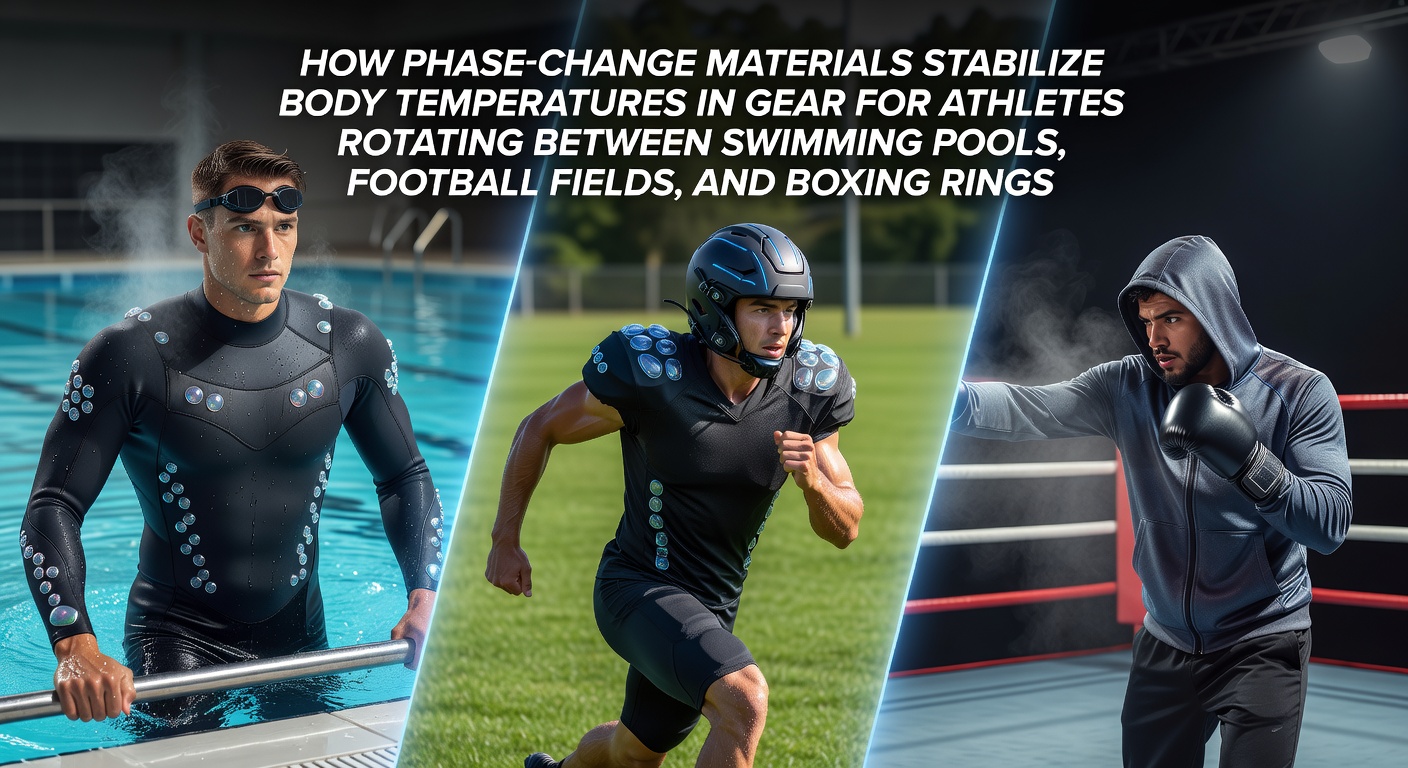
Phase-change materials absorb or release thermal energy during transitions between solid and liquid states at predetermined temperatures, which creates a buffering effect that keeps the microclimate next to the skin within a narrow range even as external conditions shift rapidly. Athletes who move from the controlled cool of swimming pools to the variable heat and sun exposure on football fields and then into the enclosed, high-intensity environment of boxing rings encounter temperature swings that exceed 15 degrees Celsius within a single training block, and PCM-treated textiles address this by storing excess heat during exertion phases while releasing it during recovery intervals. Microencapsulated paraffin waxes represent the most common PCM formulation in current sports applications because their melting points can be tuned between 28 and 35 degrees Celsius to match human skin comfort zones. When body temperature rises above the melting threshold the material absorbs latent heat without a corresponding rise in surface temperature, and the reverse process occurs once activity levels drop. Researchers at the Commonwealth Scientific and Industrial Research Organisation in Australia documented that PCM-infused base layers reduced core temperature fluctuations by up to 1.2 degrees Celsius during repeated sprint protocols that simulated cross-sport transitions. Swimming gear incorporates PCMs primarily in compression sleeves and rash guards where the materials counteract the rapid cooling that occurs upon exiting water. The encapsulation prevents leakage during repeated wash cycles, and the fabrics maintain performance after more than 50 laundering cycles according to accelerated durability tests published by the European Textile Technology Research Centre. On football fields the same technology appears in padded compression shorts and undershirts that manage heat buildup under heavy protective equipment, while boxing apparel uses PCM panels sewn into torso wraps and headgear liners to mitigate the rapid temperature spikes generated during sparring rounds.Integration Across Rotating Training Schedules
Multi-sport athletes face compounded thermal stress because each discipline imposes distinct heat-transfer demands. Pool sessions emphasize conductive cooling from water, field work introduces convective and radiative loads from sun and turf, and ring sessions generate high metabolic heat with limited airflow. PCM layers function as passive thermal capacitors that reset between environments without requiring external power or active cooling systems. Data collected during longitudinal monitoring of collegiate athletes who followed daily pool-to-field-to-ring rotations showed that garments containing 18 percent PCM by weight lowered post-session heart-rate recovery times by an average of 12 percent compared with identical garments without the additive. Manufacturing processes now embed microcapsules directly into polymer fibers during extrusion rather than applying surface coatings, which improves wash durability and prevents migration of the active material. Textile mills in Portugal and South Korea have scaled this fiber technology for commercial athletic brands, and the resulting fabrics pass both ISO 1833 chemical resistance tests and EN 14362 skin-contact safety standards. Observers note that the integration adds minimal weight, typically less than 40 grams per square meter, while preserving breathability metrics above 150 grams per square meter per day.Performance Metrics and Field Data
Controlled chamber studies conducted at the University of Waterloo in Canada measured skin temperature distributions across athletes performing 45-minute circuits that replicated swimming, football drills, and boxing intervals. PCM-treated garments maintained torso skin temperatures between 32.8 and 34.1 degrees Celsius, whereas control garments ranged from 31.2 to 36.4 degrees Celsius under identical workloads. Infrared thermography confirmed that hot spots near major muscle groups were reduced in both frequency and duration when PCM elements were present.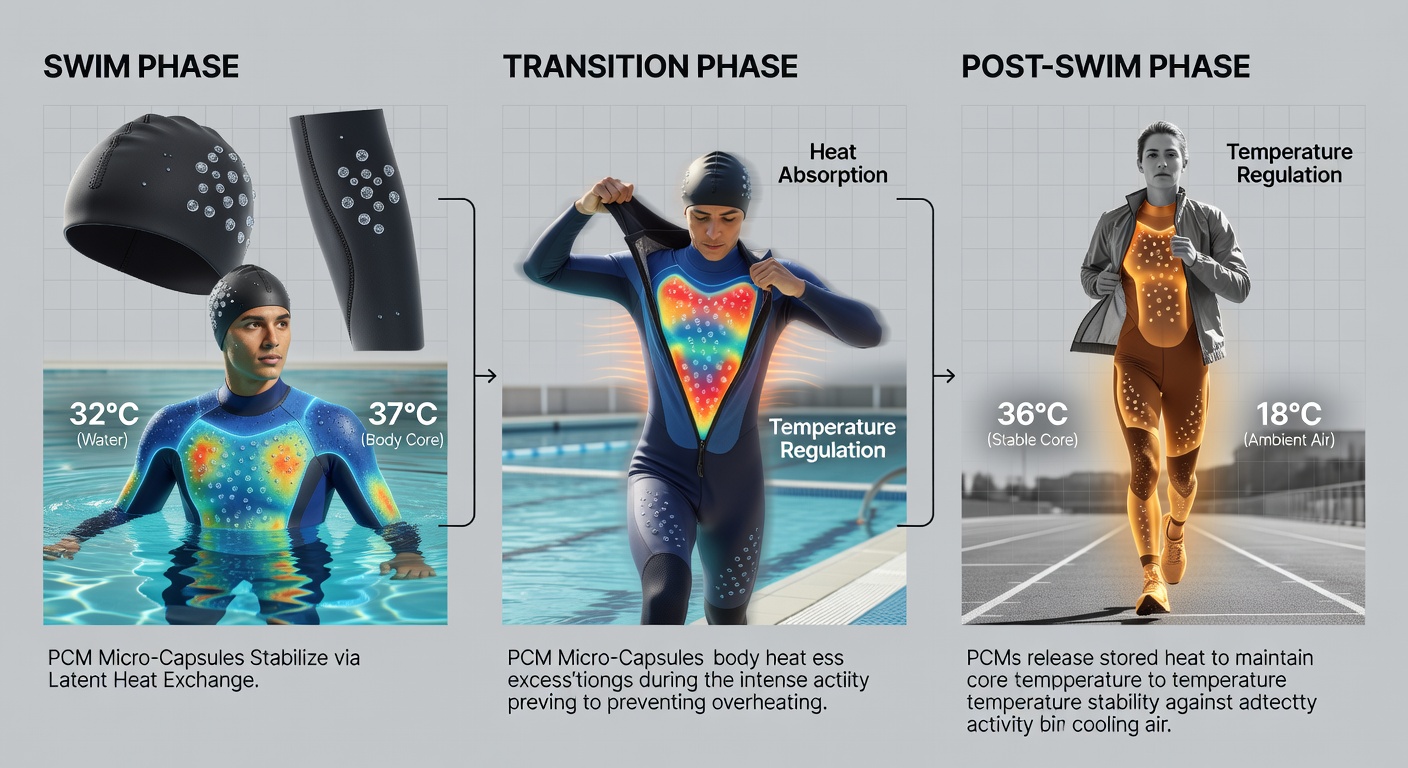 Field deployments during May 2026 pre-season camps for mixed-discipline training groups further validated these laboratory findings. Coaches tracked subjective thermal comfort scores alongside objective physiological markers, and the PCM cohort consistently reported lower ratings of perceived exertion during the transition periods between sessions. Equipment manufacturers continue to refine capsule size distributions to optimize response kinetics, with current formulations achieving full phase transition within four minutes of exposure to a five-degree temperature differential.