From Orbit to Track: Spacecraft Materials Finding New Purpose in Athletic Equipment
Jonas Schmitt · Jul 9, 2026
From Orbit to Track: Spacecraft Materials Finding New Purpose in Athletic Equipment
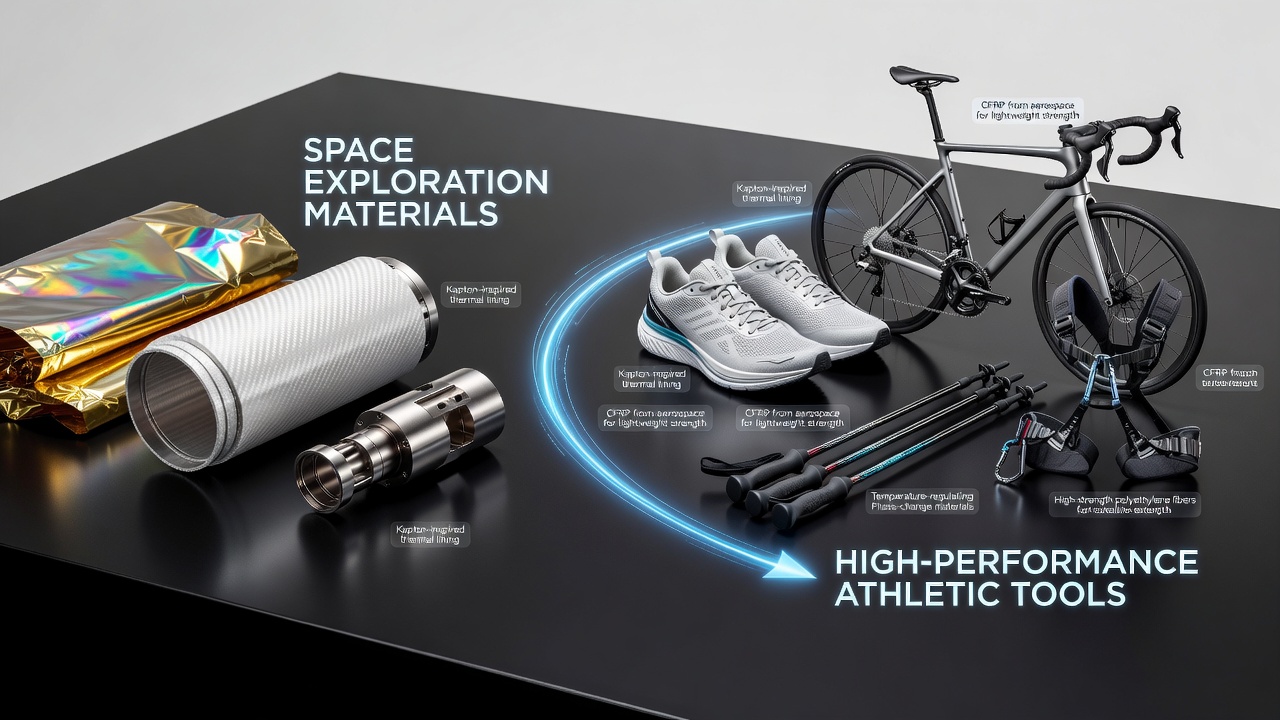
Space agencies have developed specialized materials over decades to survive extreme conditions, and those same innovations now appear in athletic equipment used across running, cycling, swimming, and racket sports. Titanium alloys originally engineered for satellite structures provide strength-to-weight ratios that manufacturers incorporate into bicycle frames and swimming fins, while multi-layer insulation systems designed for spacecraft thermal control find applications in base layers for endurance athletes training in variable climates.
Material Origins in Aerospace Programs
Researchers at agencies including NASA and the European Space Agency refined aerogels and ceramic matrix composites to protect vehicles during atmospheric reentry, and those same lightweight insulating properties transfer directly to running shoe midsoles and cycling apparel that maintain consistent temperatures during prolonged efforts. Data from propulsion system tests shows these ceramics resist degradation under repeated thermal cycling, a characteristic that equipment designers apply to volleyball knee pads and tennis racket frames exposed to intense friction and impact.
Shape-memory polymers developed for deployable solar arrays on satellites now appear in adjustable tension components within certain swim caps and compression garments, allowing the material to return to programmed shapes after deformation. Observers note that adoption timelines accelerated after 2023 when commercial spaceflight programs increased material production volumes, lowering costs for downstream industries.
Cross-Discipline Applications in 2026
By July 2026, several athletic brands had integrated silica-based aerogel particles into trail running vests, citing thermal performance data originally gathered during Mars rover missions. The same particles appear in boxing headgear linings where they reduce heat buildup during extended sparring sessions, a direct parallel to their role in maintaining stable temperatures inside pressurized crew compartments.
Cycling helmet manufacturers source thin-film coatings originally created to minimize drag on orbital vehicle surfaces, applying them to outer shells to achieve measurable reductions in wind resistance. Swimmers benefit from similar hydrophobic treatments on training suits, which originated in research to prevent ice accumulation on satellite components during low-Earth orbit passes.
Performance Data and Testing Protocols
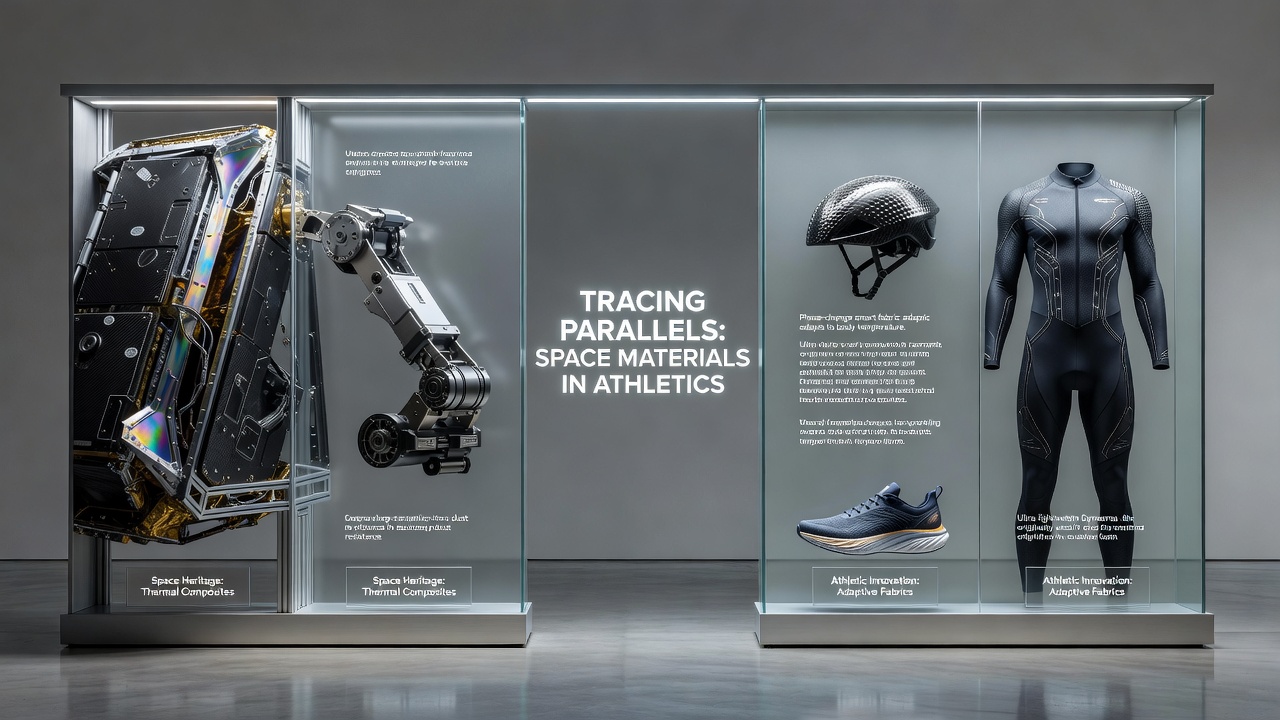
Independent laboratories replicate the vacuum and temperature extremes of space to validate athletic gear durability, with results indicating that aramid fiber reinforcements originally used in astronaut gloves extend the lifespan of goalkeeper gloves and weightlifting straps by measurable margins. According to European Space Agency technical reports, these fibers maintain tensile strength after thousands of flex cycles, a property confirmed in racket string testing conducted by university engineering departments in Australia.
Canadian research institutions have documented how phase-stable lubricants developed for satellite mechanisms reduce friction in pulley systems inside certain rowing machines and resistance equipment, though these applications remain limited to professional training facilities as of mid-2026. Equipment undergoes combined environmental and mechanical stress protocols that mirror those applied to spacecraft subsystems before certification.
Supply Chain and Manufacturing Shifts
Global material suppliers that once served primarily aerospace contracts now allocate portions of production to sports equipment firms, creating parallel manufacturing lines that share quality control standards. This convergence allows smaller athletic brands to access advanced composites previously restricted to large-scale government projects, while space programs benefit from volume-driven cost reductions in specialized polymers.
Those tracking material certifications observe that traceability requirements from orbital hardware programs carry over into sports manufacturing documentation, ensuring batch consistency across running shoe components and protective pads used in contact disciplines. The result appears in standardized testing outcomes reported by multiple governing bodies in international athletics and cycling federations.
Conclusion
The transfer of materials from space exploration to athletic tools follows established patterns of technology diffusion, with performance metrics from one domain informing design choices in another. Continued collaboration between research institutions and equipment manufacturers sustains this exchange, producing measurable improvements in weight, durability, and environmental resistance across disciplines without requiring entirely new material discovery cycles.