Examining Digital Twin Simulations for Customizing Fit Across Contact and Endurance Athletic Tools
Lars Schröder · Jul 23, 2026
Examining Digital Twin Simulations for Customizing Fit Across Contact and Endurance Athletic Tools
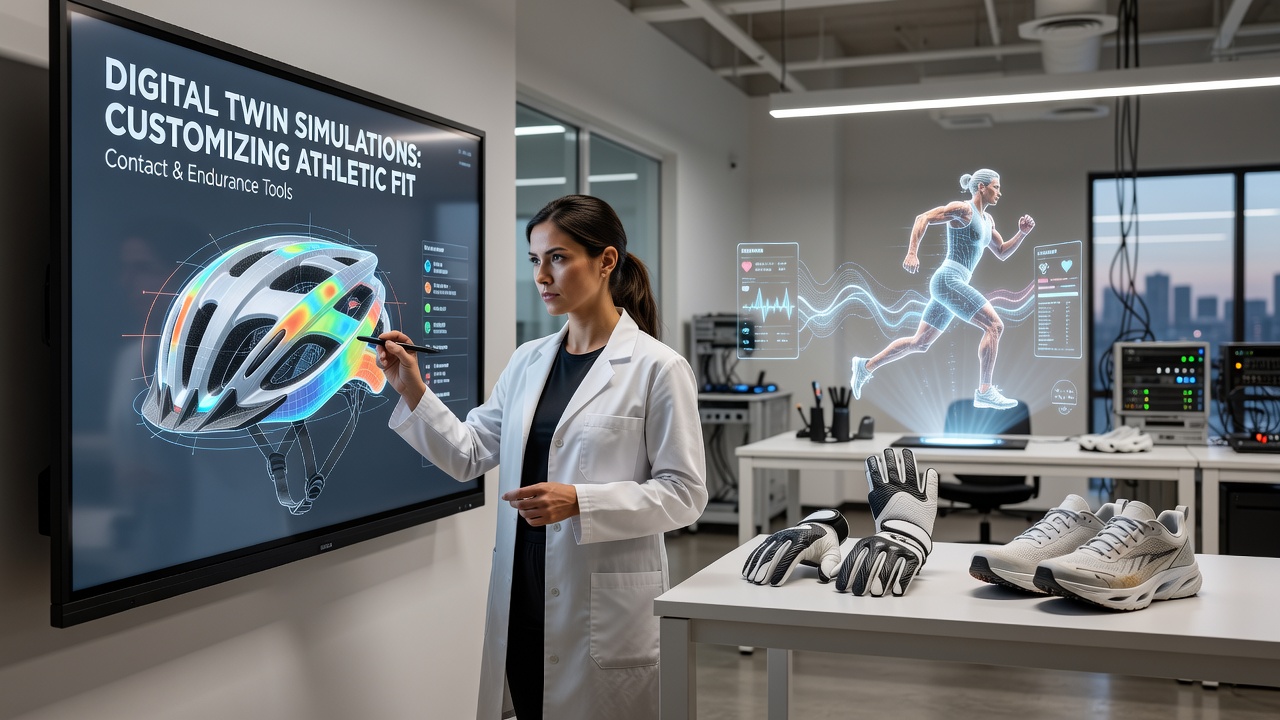
Digital twin simulations create virtual replicas of athletic equipment and human anatomy that allow precise adjustments before physical prototypes reach production lines, and this approach has gained traction in both contact sports and endurance disciplines since early development phases in the 2010s. Researchers at institutions across North America and Europe have documented how these models integrate biomechanical data with material properties to predict how gear interacts with individual athletes during repetitive motions or high-impact events.
Core Mechanics Behind Digital Twin Applications
Engineers build these twins by combining 3D scans of athletes' bodies with finite element analysis that accounts for variables such as pressure distribution, sweat absorption rates, and joint articulation ranges, while data from motion capture systems feeds real-time updates into the virtual environment. Studies from Canadian research centers indicate that simulation accuracy improves when multiple data streams converge, including temperature fluctuations recorded during prolonged training sessions and force measurements captured at contact points like knuckles or heel strikes. This integration lets manufacturers test thousands of fit permutations in hours rather than weeks, and outcomes feed directly into production specifications for items ranging from padded headgear to supportive footwear components.
Applications in Contact Sports Equipment
Protective handwear and headgear for combat disciplines benefit from digital twins that simulate how padding compresses under repeated strikes, allowing designers to adjust internal layering so that impact forces dissipate evenly across different head shapes and hand sizes. Data collected from Australian sports laboratories shows that virtual testing reduces the number of physical iterations needed by up to 40 percent, because initial designs already align with measured bone structures and muscle contours derived from participant scans. Observers note that these models also incorporate regional variations in training intensity, since athletes in warmer climates experience different sweat patterns that affect fabric stretch and padding migration over time.
Endurance Tool Customization Through Virtual Modeling
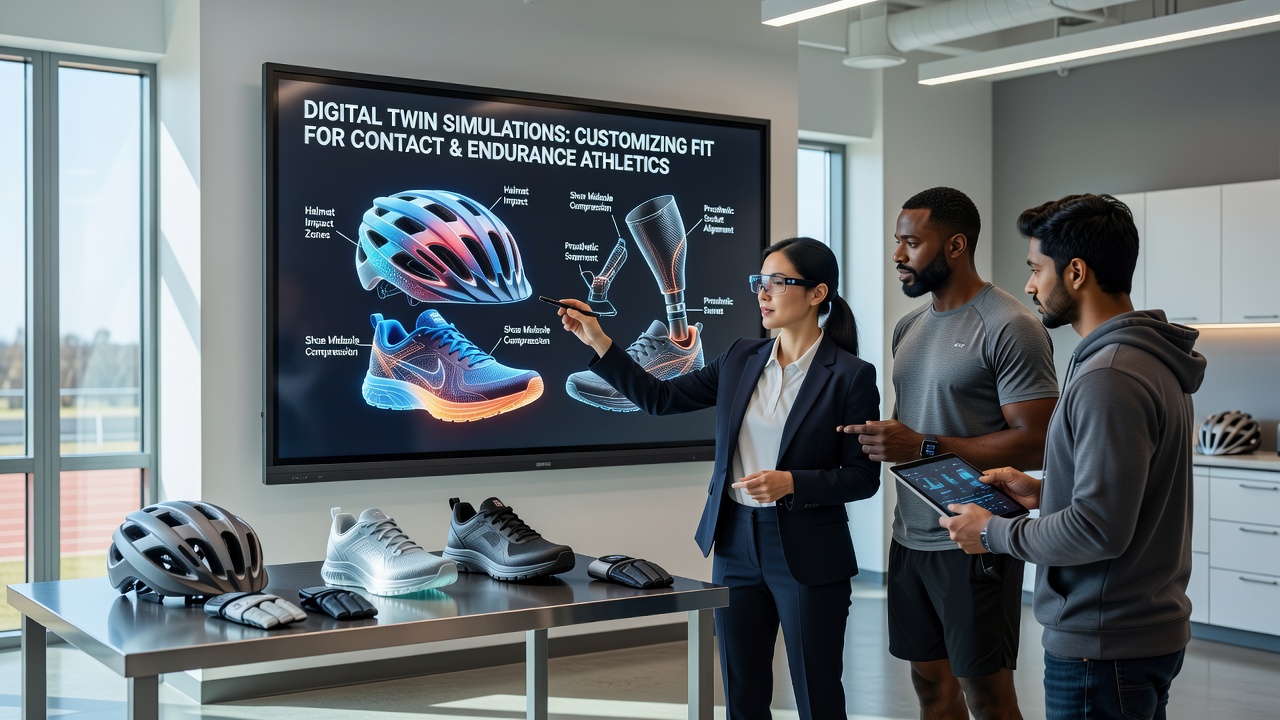
Long-distance runners and cyclists rely on footwear and saddle interfaces where small misalignments compound into performance limitations or injury risks after hundreds of kilometers, and digital twins address this by modeling cumulative stress on arches, knees, and lower backs under sustained loads. European Union-funded projects have produced datasets demonstrating that customized midsole geometries derived from twin simulations correlate with measurable reductions in peak pressure points recorded during treadmill protocols, and similar methods extend to handlebar grips that accommodate varying palm widths across rider populations. In July 2026 several North American labs plan to release comparative studies tracking how these virtual optimizations translate across different terrain profiles, including gravel paths and paved routes that impose distinct loading patterns.
Integration of Sensor Data and Iterative Refinement
Real-world feedback loops strengthen digital twin reliability when embedded sensors in prototype equipment transmit usage metrics back to the virtual model, enabling continuous calibration against actual performance rather than laboratory assumptions alone. Research published through academic channels in Asia highlights cases where grip pressure maps from rowing and swimming tools were overlaid onto endurance cycling data to identify shared fit parameters that reduce localized fatigue, although each discipline maintains unique constraints around buoyancy or vibration damping. Those who have examined the timelines note that software platforms now handle multi-sport datasets more efficiently than earlier versions, because machine learning algorithms identify patterns across seemingly unrelated equipment categories without requiring separate modeling environments for each.
Supply Chain and Regulatory Considerations
Global manufacturing networks incorporate simulation outputs when sourcing components, since virtual validation helps predict how material batches from different suppliers will behave under individualized fit parameters, and regulatory bodies in the United States and United Kingdom have begun reviewing simulation documentation as part of safety certification processes for high-contact items. This practice shortens approval cycles while maintaining traceability from raw material properties through final assembly tolerances, and trade data from regional authorities shows corresponding shifts in how specialized elastomers and composites move between production hubs.
Conclusion
Digital twin simulations continue to expand their role in refining equipment fit for athletes engaged in contact and endurance activities by merging anatomical data with dynamic performance metrics, and ongoing projects scheduled through 2026 will likely provide additional benchmarks on how these virtual processes influence real-world outcomes across varied training environments. The approach relies on accurate input data and iterative validation against physical tests, which together support more targeted production decisions without replacing traditional prototyping entirely.