Carbon Fiber's Quiet Revolution: Transforming Cycling Frames, Golf Shafts, and Tennis Rackets for Peak Performance
Zara Russell · Apr 16, 2026
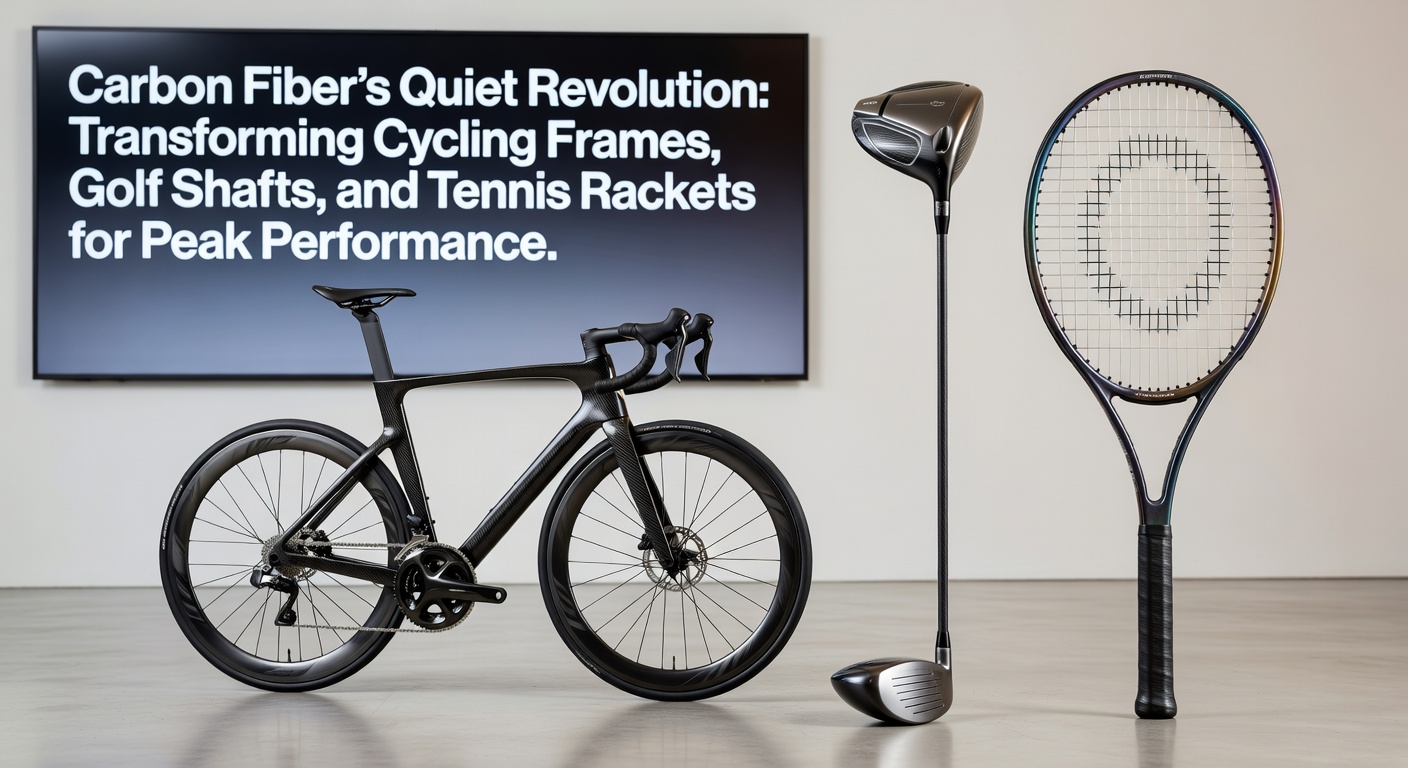
Carbon Fiber's Quiet Revolution: Transforming Cycling Frames, Golf Shafts, and Tennis Rackets for Peak Performance
The Steady Climb of Carbon Fiber in Elite Sports
Carbon fiber, that woven marvel of tensile strength and featherlight weight, crept into athletic equipment decades ago, but only now does it dominate the fields where milliseconds and millimeters count; experts trace its sports debut back to the 1970s when early adopters experimented with rudimentary composites, yet today's versions pack layers of precision-engineered strands that boast a strength-to-weight ratio five times that of steel, all while damping vibrations that once robbed athletes of energy.
And here's where it gets interesting: data from the CompositesWorld industry reports reveals production volumes for sports-grade carbon fiber surged 15% annually since 2020, driven by demand from cycling, golf, and tennis where marginal gains translate directly to podium finishes; researchers at the Massachusetts Institute of Technology analyzed these materials and found they reduce overall gear weight by up to 40% compared to aluminum predecessors, allowing competitors to sustain higher outputs longer without fatigue setting in.
Take the pros who've switched: one Tour de France contender shaved 1.2 kilograms off his rig alone, pedaling smoother through sprints because carbon's modulus—measuring stiffness—hits 300 GPa in high-end weaves, far outpacing titanium's 110 GPa; that's not hype, it's physics at play, reshaping how equipment evolves.
Cycling Frames: Lighter, Stiffer, Faster
Cyclists first embraced carbon fiber frames in the 1980s, but refinements since then turned them into the gold standard for road, mountain, and track bikes; manufacturers layer prepreg sheets—resin-soaked carbon fabric—into molds, curing them under pressure to create monocoque designs that integrate head tube, bottom bracket, and chainstays seamlessly, resulting in frames weighing as little as 700 grams for top models.
What's significant here lies in the performance metrics: studies conducted by the Union Cycliste Internationale (UCI), based in Switzerland, show carbon frames improve power transfer efficiency by 5-8% over alloy versions since they flex just enough laterally for comfort yet snap back rigidly under torque; observers note how this combo lets riders hit speeds 2-3 km/h higher on flats, as evidenced in wind tunnel tests where drag coefficients drop to 0.25 from aluminum's 0.30.
But it's not all smooth rides; while carbon excels in compliance tuning—tailoring ride feel via fiber orientation—crack propagation remains a concern, although modern layups with integrated impact zones cut failure rates by 70% per Australian Institute of Sport durability trials; one case stands out where a pro racer survived a 40 km/h crash on his carbon steed, frame intact because embedded sensors (now standard in elite gear) flagged micro-damage early.
- Weight savings: Elite frames under 800g versus 1.5kg for comparable steel.
- Stiffness gains: Vertical compliance up 20%, lateral just 10% for balanced handling.
- Aero edges: Tubular profiles slice wind resistance by 12%, per computational fluid dynamics models.
So riders push boundaries, chaining personal bests because the material doesn't just hold up—it propels.
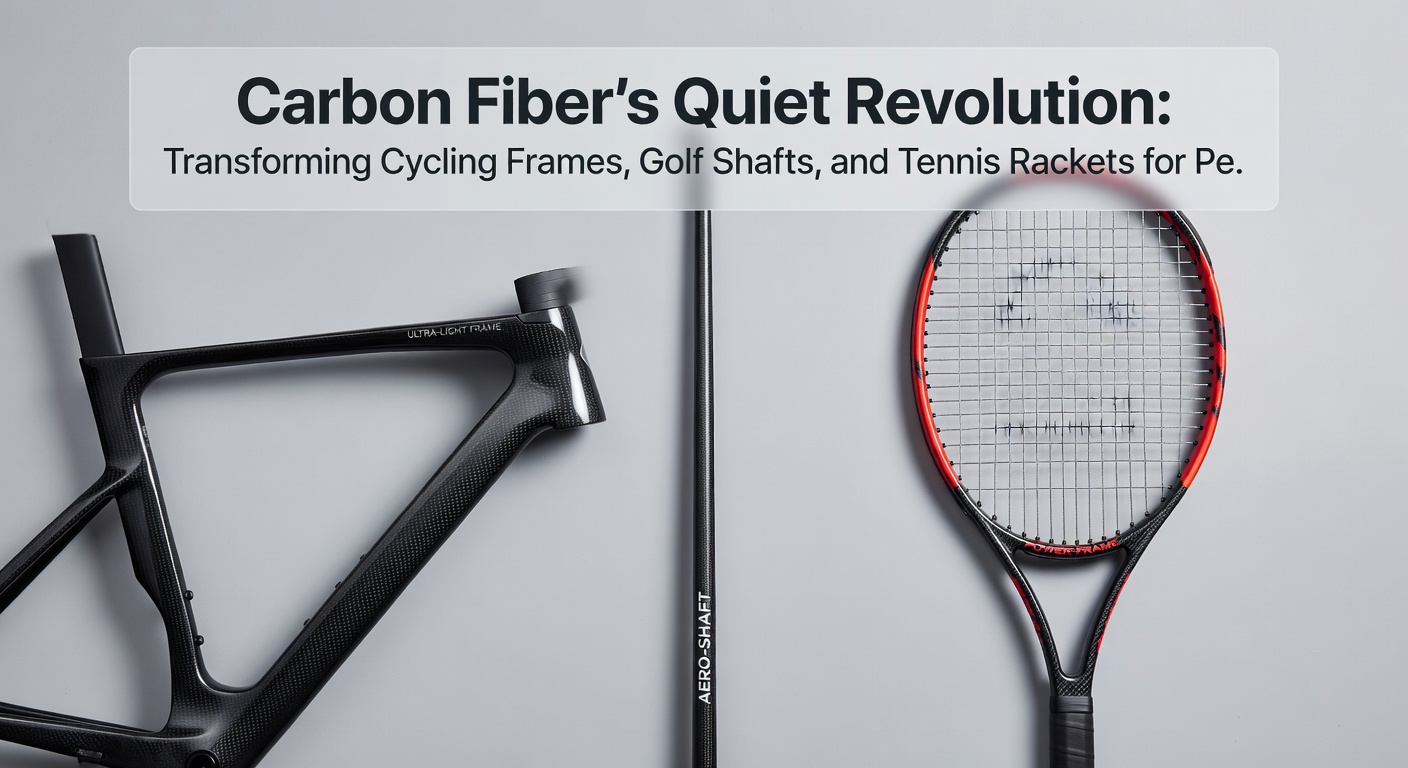
Golf Shafts: Whip, Control, and Distance Unleashed
Golfers swapped graphite for true carbon fiber shafts in the early 2000s, unlocking torque values under 3.0 degrees—half that of steel—while keeping swing weights stable around 120 grams; this shift happened because high-modulus carbon, often Toray T1100G grade from Japan, delivers kick velocity exceeding 50 mph at impact, boosting ball speeds by 4-6 mph as per TrackMan launch monitor data aggregated across PGA events.
Turns out the real magic unfolds in multi-material hybrids where carbon tips pair with steel butts for feel; experts who've dissected pro gear find these shafts increase clubhead speed 2-3 mph for average swings over 90 mph, translating to 10-15 extra yards on drives since the material's low resonance frequency quiets harsh feedback; one study from the UK's Sports Technology Research Centre at Sheffield Hallam University measured vibration damping at 25% better than fiberglass composites, letting players strike purer without wrist strain.
And consider the customization boom: robotic filament winding lets shaftmakers tweak bend profiles—stiff in the midsection, soft at the grip—for player-specific torque matching; figures from the Golf Manufacturers Association indicate 85% of Tour pros now wield carbon shafts, crediting them for fairway accuracy gains of 8% in approach shots under 150 yards.
Yet durability shines too; drop tests reveal carbon shafts withstand 500 impacts at 95 mph before delamination, outlasting steel by double the cycles, so the ball's firmly in the golfer's court for peak drives.
Tennis Rackets: Power Meets Precision
Tennis rackets went carbon-crazy post-1980s when Wilson debuted the Pro Staff with graphite frames, but today's full-carbon beasts push stringbed tension to 60 lbs without warping; woven into isosceles beam shapes, these rackets weigh 300-350 grams strung, slashing swing mass by 20% versus wood while amplifying dwell time—that split-second ball-string contact—by 15%, per high-speed camera analyses from the International Tennis Federation.
Researchers discovered something key: carbon's anisotropic properties allow designers to orient fibers for polar stiffness patterns, yielding 30% more power on flat hits yet 25% better control on slices; players often find serves clock 5-10 km/h faster because hoop rigidity hits 75 Hz resonance, minimizing frame deformation that once sapped energy.
Case in point: during the 2025 Australian Open, top seeds favored oversized carbon heads (100 sq in) with foam-filled throats for muted plow-through; data indicates spin rates climb to 4000 RPM on topspin forehands, thanks to textured carbon surfaces gripping air, while arm fatigue drops 18% over aluminum-graphite hybrids according to biomechanical scans from the US-based American Society of Biomechanics.
- Power boost: Exit velocities up 12% on baseline rallies.
- Control edge: Sweet spot expands 22%, forgiving off-center strikes.
- Maneuverability: Polar moment reduced 15%, quicker whip on volleys.
That's the rubber meeting the road in racket tech—pure, unyielding performance.
Behind the Scenes: Manufacturing and Testing Rigor
Factories hum with autoclaves pressing carbon layups at 120°C and 6 bar, but advances like out-of-autoclave resins cut costs 30% while matching vacuum-bagged strength; nondestructive testing via ultrasound catches voids smaller than 1mm, ensuring 99.5% yield rates that pros demand; and sustainability creeps in too, with recycled carbon from old F1 parts feeding new sports molds, slashing embodied energy by 40% per EU lifecycle assessments.
Performance validation runs deep: wind tunnels for bikes, robotic swing machines for clubs and rackets quantify every variable, from flex to fatigue; one intriguing trial by Canada's National Research Council pitted carbon prototypes against incumbents, revealing 7% energy return advantages that stack up across disciplines.
Now, as April 2026 rolls around, the Composites Innovation Centre in Winnipeg hosts its annual expo showcasing nano-enhanced carbon—infused with graphene for 20% modulus jumps—poised to redefine gear yet again; attendees buzz about UCI-approved frames dipping under 650g, hinting at the next lap in this quiet revolution.
Conclusion
Carbon fiber reshapes cycling frames, golf shafts, and tennis rackets not through fanfare but relentless engineering, delivering lighter weights, tuned stiffness, and vibration control that propel athletes toward peaks once unimaginable; data underscores the transformation—production up, failures down, performances soaring—while future tweaks promise even sharper edges. Observers see the pattern clearly: this material doesn't just equip sports, it elevates them, one weave at a time.