Biomechanical Sensor Integrations Mapping Joint Torque Patterns Across Racket Swings, Ball Strikes, and Aquatic Strokes for Tailored Equipment Adjustments
Zara Russell · Aug 3, 2026
Biomechanical Sensor Integrations Mapping Joint Torque Patterns Across Racket Swings, Ball Strikes, and Aquatic Strokes for Tailored Equipment Adjustments
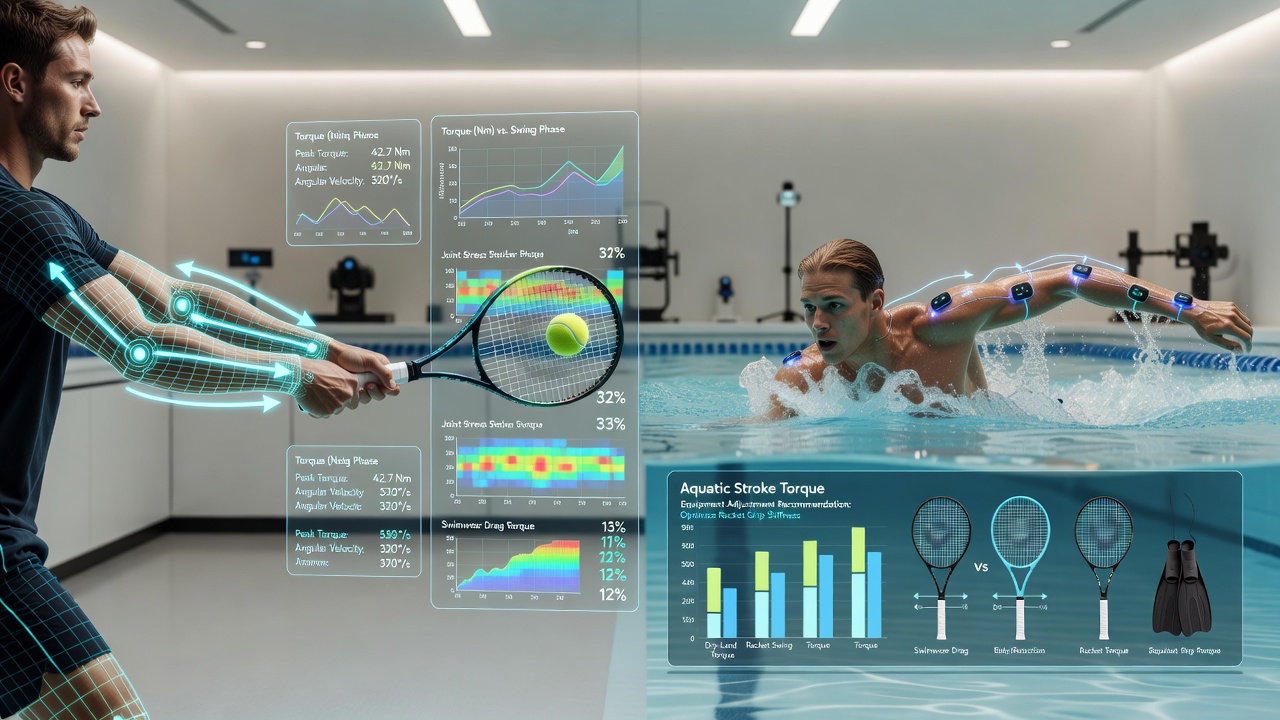
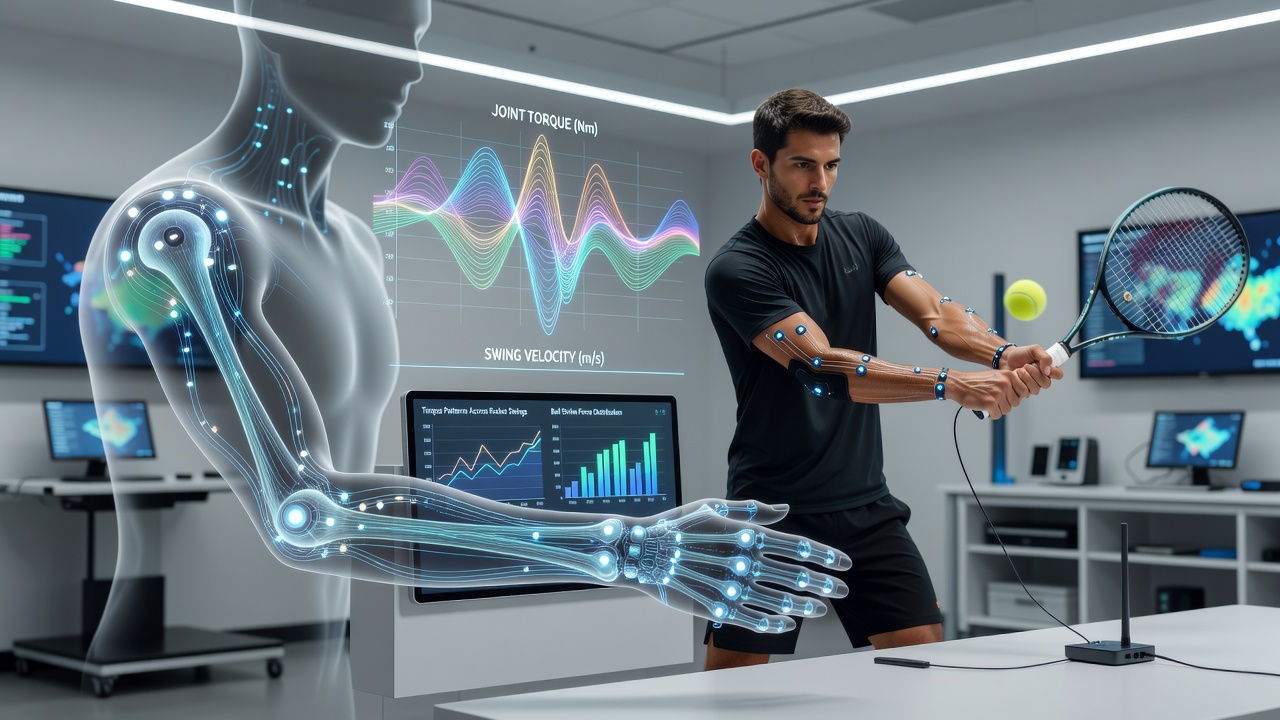
Biomechanical sensor integrations capture detailed joint torque data during racket swings, ball strikes, and aquatic strokes, enabling precise equipment modifications that align with individual movement profiles. These systems combine wearable inertial measurement units, strain gauges, and force plates to record rotational forces at the shoulder, elbow, wrist, and hip joints while athletes perform sport-specific actions. Data streams feed into analytical software that identifies peak torque timings and magnitudes, which manufacturers then translate into customized grip diameters, shaft flex points, and paddle blade angles.
Researchers at multiple institutions have documented how torque mapping in racket sports reveals asymmetries between forehand and backhand motions that standard equipment cannot accommodate without adjustment. Studies indicate that players who receive rackets tuned to their measured torque curves show consistent reductions in peak joint loading across repeated sessions. Similar patterns emerge in ball-strike activities such as golf drives or baseball swings, where sensor arrays placed along the kinetic chain detect timing mismatches between hip rotation and wrist snap that influence club or bat weighting choices.
Core Components of Torque-Mapping Systems
Modern setups rely on synchronized sensor clusters that transmit real-time data through wireless protocols to cloud-based processing platforms. Strain gauges embedded in flexible sleeves measure torsional stress at joint centers, while gyroscopic units track angular velocities that convert into torque estimates via biomechanical models. Aquatic environments require waterproofed versions that maintain signal integrity during prolonged immersion, allowing stroke-by-stroke analysis of shoulder internal rotation and elbow extension forces in swimming or rowing motions.
Calibration protocols standardize sensor placement using anatomical landmarks so that data collected from one athlete remains comparable across different sessions or facilities. Software algorithms normalize torque values against body mass and segment lengths, producing individualized profiles that equipment designers reference when altering material stiffness or adding counterbalance weights.
Applications in Racket and Ball-Strike Disciplines
In tennis and squash, torque data collected during serves and groundstrokes guide modifications to handle circumference and string tension patterns that reduce excessive wrist supination loads. Manufacturers adjust racket frame layups based on measured pronation torques, incorporating localized reinforcements that match the athlete's recorded force vectors. Ball-strike sports benefit similarly when sensors on the lower back and lead arm identify rotational sequences that inform grip tape layering or clubhead weighting distributions.
Observers note that professional training centers now incorporate these sensors into routine equipment fitting sessions, where athletes perform standardized swing sequences under controlled conditions. The resulting datasets allow iterative adjustments that align equipment resonance frequencies with the user's natural torque oscillation patterns, which in turn supports more repeatable contact points during competition.
Integration in Aquatic Training Environments
Aquatic strokes present distinct challenges because water resistance varies continuously with speed and limb orientation, requiring sensors that sample at higher frequencies to capture transient torque spikes. Researchers have applied these systems to freestyle and butterfly techniques, mapping how peak elbow flexion torques shift when swimmers transition between different paddle or fin configurations. Equipment adjustments derived from this data include altered blade curvatures on swim paddles and modified fin stiffness that better distribute propulsive forces across the ankle and knee joints.
Facilities in multiple regions have begun embedding these sensors into routine stroke analysis programs, where baseline measurements taken at the start of a training block inform subsequent gear selections. Data collected during August 2026 testing cycles at several international aquatic centers demonstrated consistent correlations between torque symmetry improvements and reductions in reported shoulder discomfort when fins and paddles received targeted stiffness modifications.
Data Processing and Equipment Customization Workflow
Raw torque signals undergo filtering to remove motion artifacts before biomechanical models calculate joint moments that feed into design software. Engineers then simulate equipment responses under the recorded loading conditions, iterating on parameters such as material modulus or geometric offsets until predicted joint torques fall within target ranges. This workflow connects directly with production lines that fabricate small-batch components tailored to individual profiles rather than relying on generic sizing charts.
Industry reports from organizations including the International Society of Biomechanics in Sports highlight how these integrations shorten the iteration cycle between measurement and final equipment delivery. Australian Institute of Sport research summaries describe parallel applications in multi-sport athletes who rotate between racket, striking, and aquatic disciplines, where unified sensor platforms maintain consistent data formats across environments.
Future Directions in Sensor-Equipment Linkages
Continued refinement of machine-learning models that interpret torque datasets promises further personalization of equipment parameters such as damping characteristics in racket frames or buoyancy distribution in aquatic training tools. Partnerships between sensor developers and equipment manufacturers continue to expand the range of adjustable features that respond directly to individual joint torque signatures collected during live training sessions.
Conclusion
Biomechanical sensor integrations provide objective torque data that supports equipment modifications across racket swings, ball strikes, and aquatic strokes. The workflow from data capture through analysis to customized production relies on standardized protocols and iterative design processes that align gear properties with measured movement demands. Ongoing applications in training centers and research facilities demonstrate the expanding role of these systems in precision equipment fitting for athletes engaged in multiple disciplines.