Bio-Based Composites Finding New Roles in Equipment for Distance Athletes, Contact Sports Participants, and Racket Players
Lars Schröder · May 28, 2026
Bio-Based Composites Finding New Roles in Equipment for Distance Athletes, Contact Sports Participants, and Racket Players
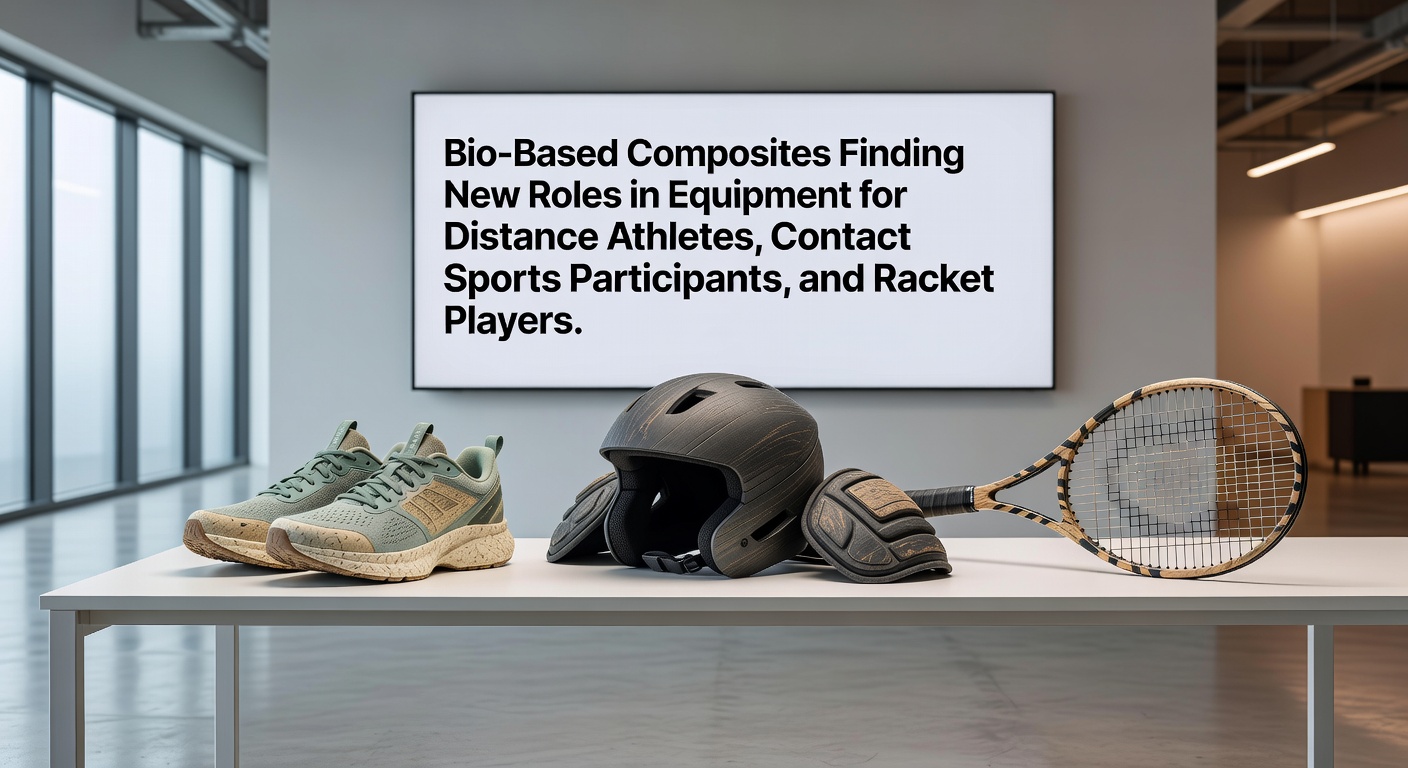
Bio-based composites derived from plant fibers such as flax, hemp, and jute combined with bio-resins have entered production lines for sports equipment, where they replace portions of carbon fiber and petroleum-based plastics in components that must withstand repeated impact, flex, and abrasion. Researchers at institutions across North America and Europe have documented tensile strengths that approach those of conventional synthetics while offering reduced weight in certain layups, and manufacturers have begun scaling these materials into running shoes, protective padding, and racket frames.
Distance Running Applications
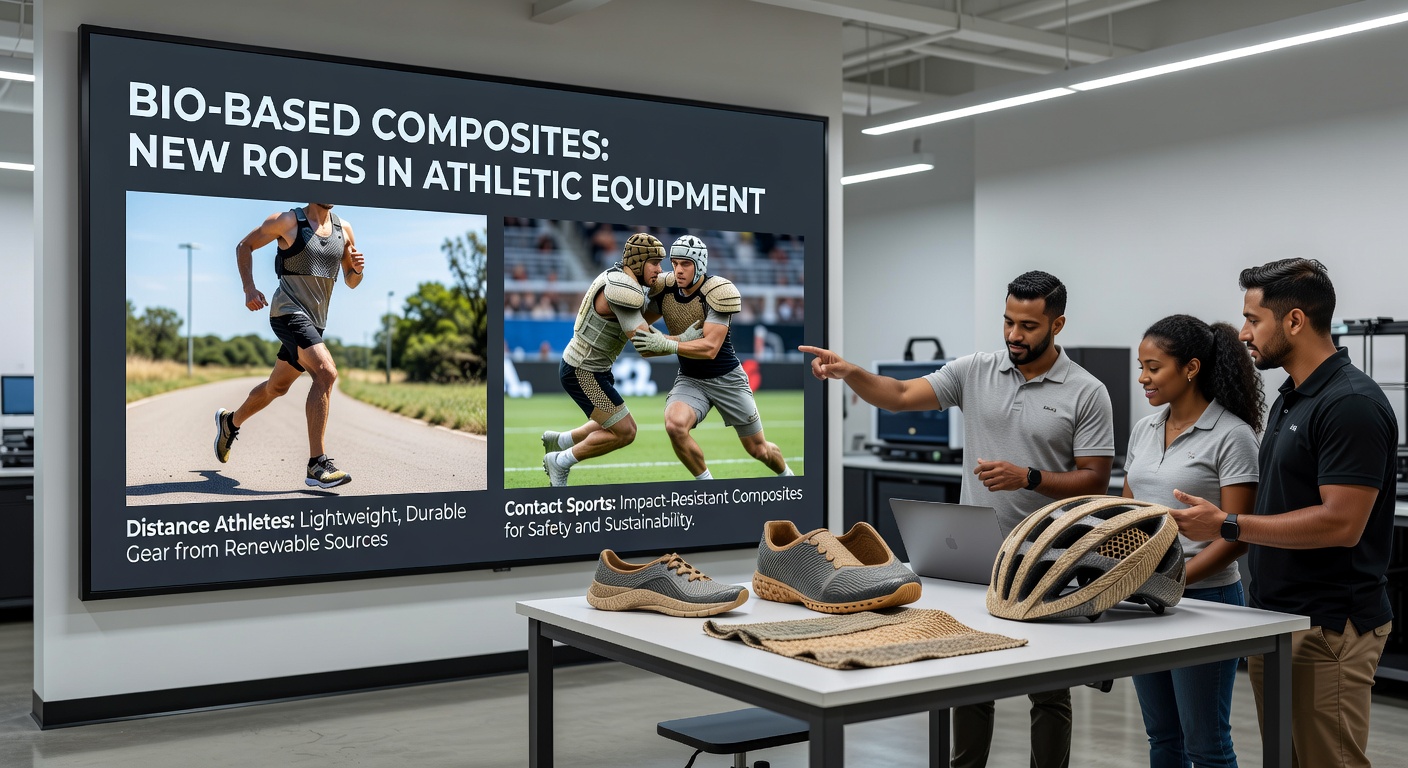
Shoe midsoles and heel counters now incorporate flax-fiber composites in models from several major brands, where the material provides energy return while allowing the shoe to flex along natural gait lines. Studies conducted at the University of British Columbia tracked runners over 500-kilometer cycles and recorded comparable durability to traditional EVA foams, with the added benefit of lower carbon emissions during material production. Upper fabrics woven from hemp blends appear in trail models released during 2025, and these versions maintain breathability under prolonged moisture exposure without delaminating at stitch lines.
Supply-chain data from Canadian agricultural processors show increased flax harvests allocated specifically to composite prepregs, supporting the shift toward renewable feedstocks. In May 2026 several European brands plan to introduce distance shoes whose entire midsole stack uses bio-based resins certified under EU sustainability criteria, extending the same material family already tested in cycling components.
Contact Sports Equipment
Shoulder pads and shin guards for rugby and American football have begun using hemp-fiber reinforced shells that absorb and distribute impact forces through layered fiber orientations. Laboratory drop-tower tests performed at the University of Manchester demonstrated that these bio-composite panels reduce peak transmitted force by measurable percentages compared with earlier plastic versions, while the natural fiber surfaces accept coatings that resist abrasion from field contact. Helmet liners produced with jute-bioepoxy combinations appear in limited professional lines, where the material's vibration-damping properties help manage repeated low-level impacts during training blocks.
Manufacturers report that the same prepreg sheets used for pads also feed into protective cups and elbow guards, allowing a single material qualification process to cover multiple SKUs. Regulatory filings with the European Chemicals Agency confirm that bio-resin systems now meet REACH thresholds for athlete-contact items, clearing the path for broader adoption across contact-sport categories.
Racket Sport Implementations
Tennis and squash racket frames contain flax-fiber reinforcements in the hoop and throat sections, where the composite layers sit between carbon plies to tune torsional stiffness without adding mass. Racquet technicians at major testing facilities have measured swing weights and vibration frequencies that remain within professional tolerances, and several ATP players have used prototype frames during 2025 exhibition matches. Grip pallets molded from bio-based composites appear in limited runs, offering a textured surface that maintains tack under sweat exposure while reducing reliance on petroleum-derived thermoplastics.
Industry reports compiled by the Sports & Fitness Industry Association track rising patent activity around bio-composite layups for rackets, with filings originating from both Asian and European manufacturers. Production schedules released in early 2026 indicate that full production lines for these hybrid frames will come online by May, allowing retailers to stock models that carry the same performance ratings as earlier all-carbon versions.
Material Processing and Certification Trends
Resin transfer molding and compression techniques originally developed for aerospace now operate at sports-goods volumes, and the lower processing temperatures required by many bio-resins reduce energy input per part. Third-party certification bodies verify fiber content and resin origin through chain-of-custody documentation, giving equipment makers verifiable sustainability metrics for marketing and regulatory compliance. Observers note that scrap from these processes can be mechanically recycled into lower-performance parts such as shoe insoles, closing material loops within the same factories.
Testing protocols at independent laboratories include cyclic fatigue rigs that simulate thousands of foot strikes or ball impacts, and results feed directly into updated ASTM and ISO standards under review for bio-based sports products. Data collected through 2025 show failure rates comparable to legacy materials when fiber alignment and resin cure cycles are optimized.
Conclusion
Bio-based composites continue to move from pilot projects into volume production across footwear, protective gear, and racket frames. Equipment makers document performance metrics that meet existing standards while supply chains expand around agricultural fiber sources. As certification frameworks stabilize and manufacturing processes scale, the same material families will support additional product categories without requiring athletes to accept trade-offs in weight, durability, or feel.