Behind the Scenes: Regional Weather Patterns and Material Choices in Volleyball, Boxing, and Cycling Gear
Zara Russell · Jun 6, 2026
Behind the Scenes: Regional Weather Patterns and Material Choices in Volleyball, Boxing, and Cycling Gear
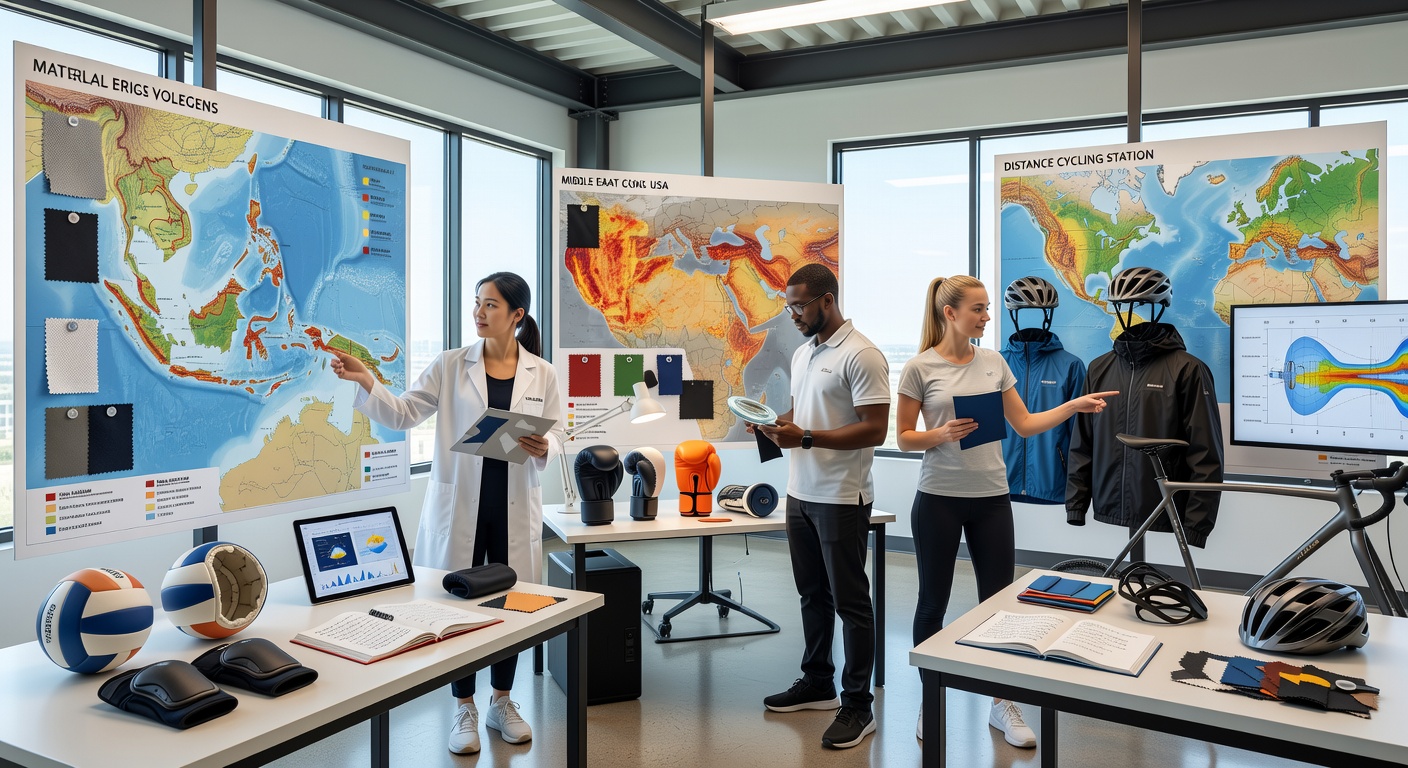
Regional weather patterns shape the materials selected for athletic equipment across multiple disciplines, and volleyball, boxing along with distance cycling offer clear illustrations of this influence. Coastal humidity levels often exceed 80 percent in areas such as the Philippines and parts of Florida, prompting manufacturers to incorporate synthetic mesh panels into volleyball shoes that accelerate moisture evaporation while maintaining traction on sand or indoor courts. Data from the National Oceanic and Atmospheric Administration indicate that average summer dew points in these zones reach 75 degrees Fahrenheit, which accelerates material degradation in natural leather components and drives adoption of treated polyurethane alternatives instead. Manufacturers conduct accelerated aging tests that replicate repeated exposure to salt-laden air and high ultraviolet indices, conditions prevalent along equatorial coastlines. Volleyball balls receive additional coatings of silicone-based polymers in such environments because untreated surfaces absorb moisture and lose consistent bounce characteristics after fewer than 50 hours of play. Boxing gear responds to similar humidity gradients through adjustments in glove construction. In tropical training camps located in Thailand and Indonesia, where daily rainfall totals frequently surpass two inches during monsoon seasons, padding layers shift toward open-cell foams encased in perforated synthetic leather. These modifications permit rapid drying cycles between sessions and reduce weight gain from absorbed perspiration. Research conducted at the University of Queensland in 2024 documented a 34 percent reduction in bacterial colonization when such perforated designs replaced traditional vinyl coverings under controlled humidity chambers set at 90 percent relative humidity. Distance cyclists encounter wind-driven precipitation and temperature swings that dictate fabric selections for jerseys and bib shorts. In the Pacific Northwest of the United States and the Scottish Highlands, where June 2026 climate summaries project average wind speeds above 18 miles per hour accompanied by frequent light drizzle, apparel brands integrate laminated membranes with microporous structures. These layers block external moisture while allowing internal vapor transmission rates above 15,000 grams per square meter per 24 hours, figures verified through standardized ISO 11092 testing protocols. Tire compounds for road bicycles also vary by region. Cyclists training in arid zones such as inland Australia select rubber blends with higher silica content to maintain grip when pavement temperatures climb above 120 degrees Fahrenheit, whereas riders in temperate maritime climates favor compounds optimized for lower rolling resistance on damp surfaces. Laboratory trials at the Technical University of Delft demonstrated that silica-enhanced tires retain 12 percent more cornering friction after 500 kilometers on wet basalt aggregate compared with conventional carbon-black formulations.  Material transitions extend to protective elements as well. Volleyball knee pads used in desert regions of the southwestern United States incorporate aerogel-infused liners that buffer against surface temperatures exceeding 140 degrees Fahrenheit, whereas pads intended for highland venues in Peru feature denser closed-cell foams that retain flexibility at elevations where nighttime lows drop below 40 degrees Fahrenheit. Boxing headgear follows parallel adaptations; Caribbean facilities favor lightweight thermoplastic shells with reflective outer layers to deflect intense solar radiation, while European winter training centers specify neoprene ear covers that maintain elasticity at subzero temperatures. Supply chain documentation reveals that regional testing facilities now operate year-round calibration schedules. A facility in Singapore maintains chambers programmed to 95 degrees Fahrenheit and 95 percent relative humidity for volleyball and boxing equipment validation, whereas a counterpart in Norway replicates wind chill values down to minus 22 degrees Fahrenheit for cycling apparel and tire assessments. These protocols generate performance datasets shared across industry working groups coordinated by the International Federation of Sports Materials, which released updated guidelines in early 2025 covering accelerated weathering standards. Athletes traveling between climate zones frequently encounter equipment that underperforms when specifications remain fixed to a single environment. A distance cyclist relocating from the dry heat of Arizona to the persistent drizzle of the Pacific Northwest often switches tire casings within the first training block to preserve handling precision. Volleyball teams competing in international tournaments maintain multiple ball inventories differentiated by surface treatment levels calibrated to local humidity forecasts issued 72 hours before match day. Continued monitoring of precipitation patterns and temperature extremes provides manufacturers with updated parameters for compound formulations. Satellite-derived moisture indices and ground station records feed directly into predictive models that forecast material lifespan reductions of up to 40 percent when equipment crosses from arid to subtropical zones without reformulation. These models integrate variables such as ultraviolet dosage, salt aerosol concentration, and diurnal temperature ranges collected across more than 120 global monitoring stations. Observers note that the cumulative effect of these weather-driven specifications appears in equipment labeling that now includes climate-specific usage recommendations printed alongside standard size and weight information. Such labeling emerged after collaborative reviews conducted by standards organizations in Australia, Canada, and the European Union during 2025, which aligned testing methodologies across hemispheres.