Acoustic Damping Layers in Athletic Grips Reduce Vibration Feedback Across Golf, Tennis, and Boxing
Logan Flores · Jul 16, 2026
Acoustic Damping Layers in Athletic Grips Reduce Vibration Feedback Across Golf, Tennis, and Boxing
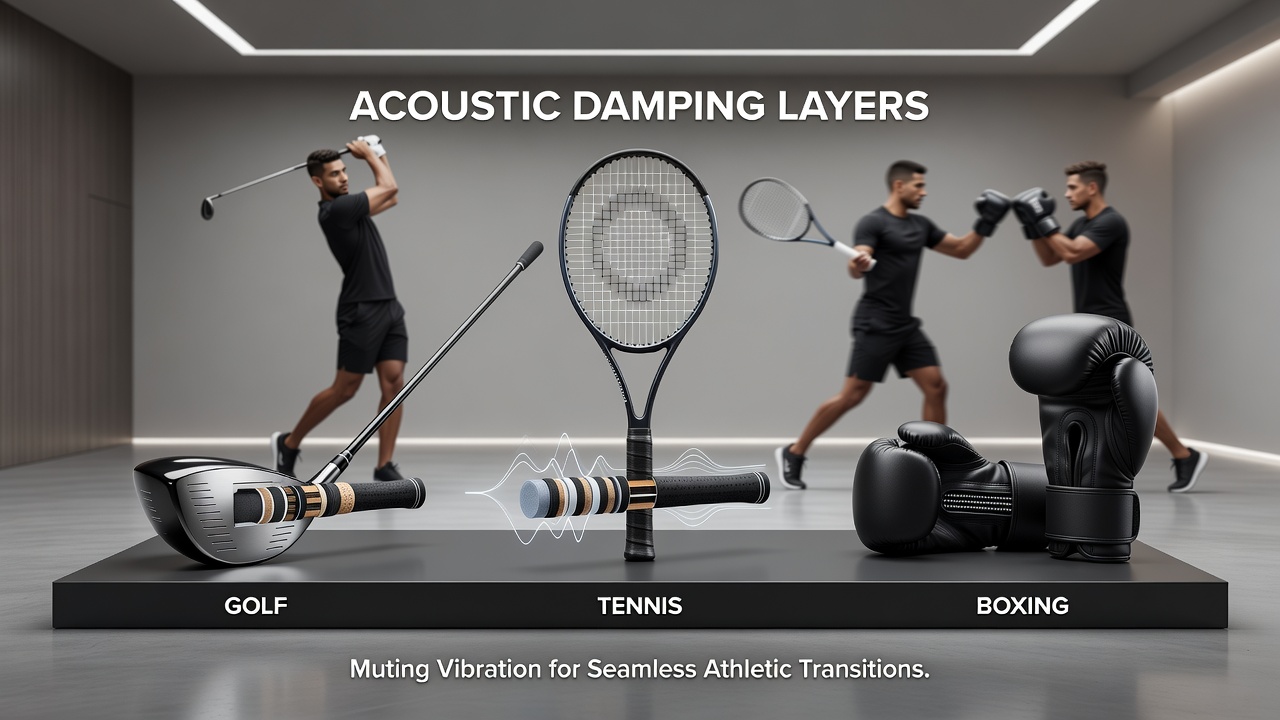
Acoustic damping layers consist of viscoelastic polymers and composite foams placed within handles adn grips on sports equipment, and these materials convert vibrational energy into heat during impacts. Athletes who rotate between golf swings, tennis volleys, and boxing combinations encounter repeated shock transmission through their hands and forearms, while the damping layers limit the duration and amplitude of those vibrations. Manufacturers embed the layers at varying thicknesses depending on the sport, yet the core principle remains consistent across applications because the materials respond to frequency ranges typical in each activity.
Material Composition and Vibration Control Mechanisms
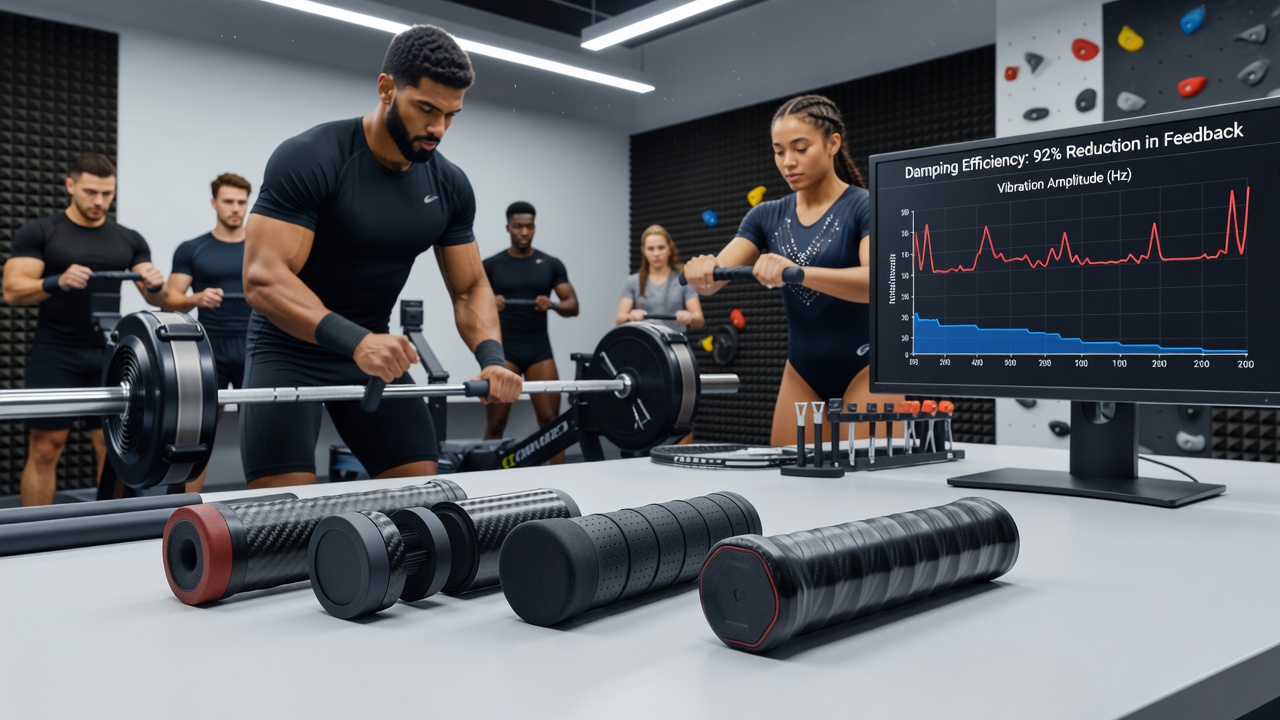
Researchers have documented how polyurethane-based elastomers combined with microcellular structures absorb frequencies between 20 Hz and 2000 Hz, which covers the range produced by club-ball contact in golf, racket-string impacts in tennis, and glove-to-target collisions in boxing. Data from laboratory tests indicate that a 2 mm to 4 mm damping layer can reduce peak acceleration transmitted to the hand by 35 to 60 percent compared with standard rubber grips. The same compounds appear in equipment designed for multi-sport users because the damping properties stay effective whether the motion involves a full golf backswing or rapid boxing combinations.
Industry reports note that suppliers source these polymers from facilities in Germany and Japan, where formulations undergo adjustment for temperature stability between 5 °C and 40 °C. That stability matters for athletes training outdoors in variable conditions, since material stiffness changes can alter damping performance if the formulation lacks proper additives.
Application in Golf Equipment
Golf club grips incorporate damping layers beneath the outer rubber or cord surface, and these layers sit directly against the shaft to intercept vibrations traveling upward after ball impact. Testing protocols established by the Royal and Ancient Golf Club and the United States Golf Association measure grip vibration using accelerometers placed at standardized hand positions. Results show that grips with integrated damping layers produce lower readings at frequencies associated with off-center strikes, which occur frequently during practice sessions when players experiment with different swing paths.
Equipment makers have introduced models since 2024 that combine the damping layer with textured outer surfaces, allowing players to maintain control while the inner layer handles energy dissipation. July 2026 marks the scheduled release of updated testing guidelines from the International Golf Federation that will require manufacturers to report vibration transmission data alongside traditional grip weight and torque specifications.
Integration in Tennis Racket Handles
Tennis racket manufacturers place damping inserts inside the handle pallet or along the shaft throat, and these components target the higher-frequency vibrations generated when the ball contacts the stringbed off-center. Studies conducted at the University of Queensland Sports Science Laboratory measured racket handle acceleration during simulated volleys and found measurable reductions when viscoelastic sheets were included. The layers also interact with the frame's overall stiffness, because a stiffer frame transmits more energy unless the grip system compensates through damping.
Professional players who switch between tennis and other hand-intensive sports often select rackets with modular grip systems that allow quick addition or removal of damping sleeves. This modularity supports training rotations without requiring entirely separate equipment sets for each discipline.
Use in Boxing Gloves and Handwraps
Boxing gloves contain damping layers within the knuckle padding and along the wrist strap area, where repeated impacts create sustained low-frequency vibration. Manufacturers embed sheets of closed-cell foam blended with viscoelastic polymers that compress and recover between punch sequences. Canadian Standards Association guidelines for protective equipment specify minimum energy absorption thresholds, and several commercial models now list acoustic damping performance as an additional measured characteristic.
Athletes who include boxing sessions in their weekly rotation report that gloves with these layers allow longer training blocks before hand fatigue sets in, although individual responses vary with wrap tension and punch technique. The same damping materials appear in speed bag platforms and heavy bag attachment points to reduce vibration traveling through support structures.
Testing Standards and Performance Data
Independent laboratories apply ISO 13753 methods for measuring vibration transmissibility through handles, and these procedures have been adapted for sports equipment evaluation. Figures from 2025 test cycles reveal that multi-layer grip constructions consistently outperform single-material designs across the three sports examined. Equipment certification programs in Australia and the European Union now request damping data as part of voluntary disclosure, helping coaches and athletes compare products when selecting gear for cross-training programs.
Supply chain documentation shows that damping polymers move through established routes from Asian production sites to assembly facilities in North America and Europe, with traceability requirements increasing after regulatory updates in 2025. These requirements focus on chemical composition rather than performance claims, yet they influence how quickly new formulations reach market.
Conclusion
Acoustic damping layers have become standard features in grips and handles designed for athletes who move between golf, tennis, and boxing. The technology relies on established viscoelastic principles applied at different scales depending on equipment type, and ongoing standardization efforts continue to refine how performance data is collected and reported. Athletes gain access to equipment that manages vibration across varied impact profiles while maintaining the handling characteristics required for each sport.